A blog devoted to the actors and public policy issues involved in the 1998 District of Columbia Court of Appeals decision in Freedman v. D.C. Department of Human Rights, an employment discrimination case.
I live in the Cleveland Park section of Washington, which spreads throughout the northern part of the District of Columbia. The neighborhood first attracted residents because it was the high ground -- blessed relief from the swampy heat of Washington summers. In fact, Cleveland Park got its name from President Grover Cleveland, who bought a country "cottage" in the area in 1886. Similar "cottages," with their wraparound porches built to catch the cool breezes, still line the streets of Cleveland Park. I have lived in this neighborhood for about 23 years -- almost as long as I lived in my hometown of Philadelphia. I know each block, each apartment building. There has been little building here on upper Connecticut Avenue in the last decades, and I have the illusion of having put down roots here. There is a synagogue in the neighborhood, Adas Israel, a large conservative congregation to which many illustrious Jews belong. They know me in some of the stores but not in any of the restaurants. I never eat out. I am a minimalist. I haven't been to the movies since 1992, though the neighborhood theater, The Uptown, features first-run movies. Movie premieres that take place in Washington always happen at the Uptown. In the late 1990s former President Clinton attended a movie premiere at The Uptown. I stayed away from the theater that night. My presence near the President of the United States would make the Secret Service apprehensive. I have, in fact, been investigated by the U.S. Secret Service as a potential threat to the President. But we won't go into that.
Even the pigeons of Cleveland Park know me; the moment I come out with a bag of feed, they begin to fly toward me from blocks away. It is an area that stretches from Cathedral Avenue on the south to Tilden Street on the north and west from Wisconsin Avenue to Rock Creek Park on the east. Although readers unfamiliar with Washington will not know these street names. The stretch of Connecticut Avenue, where I live, that passes through Cleveland Park is lined mostly with apartment houses and condominiums. But the side streets are lined with beautiful old homes, many of them built in the late nineteenth-century. One steps into another world when one walks along the side streets of Cleveland Park, an old and gracious world. Almost every day after lunch, I go to the neighborhood library, built in 1953, the year I was born. There's been talk that the library may be torn down and replaced with a modern structure. I hope not. The library, though antiquated, has its own charm. The library is the home of my ambitions and illusions. It is at the library where, in fantasy, I meet with Shakespeare and Dickens and negotiate foreign policy with Napoleon. Though I never eat out, I imagine that the library is a kind of cafeteria where one converses with old friends and gets one's fill of food for the soul.
Suffering stems from desire, but the entire premise of modern life is built upon want. Want for a better future, want for a career, want for material goods. The Tao masters suggest to just be, the Nike copywriters to just do. Is there a middle ground to be found among extremes?
Surrendering one's life in pursuit of fulfilling a want is not necessarily self-centered. We, as humans, are irrelevant. The only thing we have to offer is that which will supercede our lives. Love left in our loved one's hearts is irrelevant because they too, will die.
This is not advocating for self-centeredness, this is an acknowledgement of what Americans will never admit — our lives mean nothing; unless we abet in a cultural evolution. Such an evolution is the only way to live forever.
That notion could be construed as nihilistic, but if one takes the equal and opposite stance, the sacrifice could be freeing.
Could. Because should one submerge the self in pursuit of something greater than themselves, then the self is lost and so is any chance for enjoyment. Yes, perhaps there are beers to be drunk after a long day of building something outlasting the evaporating human spirit, but then a life lived without regard to evaporating life, the human spirit forgets its chance to prosper. Without proper indulgence, there is no energy left to build that which lasts forever. But with too much indulgence, the goal is forgotten in the midst of enjoyment, an enjoyment that can be more detrimental than if it never existed. Because enjoyment can be distracting.
Few people have the temperament or desire for such a path. 'Why?' they say. Life is fleeting and should be enjoyed. And that is 100 percent true.
So what if you find yourself on a path with little enjoyment, but it is the only way you can conceivably begin to build something that lasts beyond death? What if pursuing the one thing you enjoy means forgoing opportunities for pleasure. Does this mean that the path is wrong? Does this mean one should return to the path of pleasure and forget that of service? When we, in America, have such freedom and such opportunity to sit at a desk for eight hours a day and cash a paycheck every other Friday with no outpouring of self or sacrifice, why would one pursue the other path?
Is it ego-ism that would allow one to preposterously perceive notions of contributing something useful to society? And then there are those that seem to do exactly what it is what you want, but effortlessly. Does this mean you are not meant to act in the capacity you see as your destiny?
But then if destiny is a choice, is the only choice between pleasure and work? And perhaps pleasure will come at a later date, after trees are cleared for an easier passage. But somehow, the further I travel along this road, the further I become from what I want to be. Perhaps this is untrue in ways cloudy from proximity, but that I cannot see yet.
Frustration, whether occasioned by loss or the result of unfulfilled aims, is difficult to bear. Substitute satisfactions will always be sought to mitigate the pain of loss or to soothe the grief of disappointed ambitions.
It is said of Napoleon, for example, that in exile on St. Helena, he took to gardening, attacking its problemswith martial courage and discipline. Historians note that he conscripted his entire colony to join in the enterprise of digging, carting, planting, watering, and weeding. Napoleon is said to have consumed with delight the fresh vegetables that the well-watered garden produced.
Perhaps, for Napoleon, gardening provided a substitute satisfaction, a replacement for a lost empire. I have no doubt that for my aunt, gardening was a substitute for something she never had -- children.
For thwarted dictators, regardless of hue or shade -- those who have lost an empire, or those whose desire for an empire has been frustrated -- gardening provides a sublimated fulfillment of a childish wish to dominate. The garden is a world that accepts the authority of its master without question -- a world in which vigilant cultivation, a sort of horticultural discipline meted out by the gardener-as-master to his slave empire, the garden, generally assures the realization of the ideals of rigid compliance and luxuriant perfection.
Invoking Nietzsche, and a little German philology as well, we learn that "slavery is, as it seems, both in the cruder and in the more subtle sense, the indispensable means of spiritual discipline (zucht) and cultivation (zuchtung), too."
My aunt inhabited a psychological world in which the concepts of cultivation (i.e, zuchtung, in the form of compulsive pruning and weeding -- really horticultural castration) and discipline (zucht) merged; a world in which the distinction between the cultivation of plants and the disciplining of children was blurred so that reasonable pedagogic limitations on the feasibility -- not to mention desirability -- of molding absolute perfection and compliance in children were incomprehensible to her. Failure of the child to respond to cultivation would be perceived by my aunt as the thwarting of the will of the gardener, and would suggest the need for pruning -- i.e., castration -- the preferred means of dealing with weeds, overgrown plants, and obstreperous children (and troublesome males of all ages, for that matter). My aunt's motto: "If it offends the subtler taste, prune it!"
The gardener despises weeds and recalcitrant plants ("nature's rank and gross") just as the dictator abhors political dissidents; nonconformity with the established norm -- really the narcissistic ideal -- is highly threatening for both the dictator and the earnest gardener.
The presence of weeds in another person's garden -- and my aunt never failed to notice the weeds in other people's gardens -- was always an occasion for stern condemnation of both the gardener and his lax methods of cultivation. One could expect, also, a lecture on the inferiority of the species of plant, tree, and shrub found in other people's gardens, as well as a critique regarding the placement and arrangement. "That tree is too close to the house," my aunt often said, pointing to her neighbor's dwelling, "a storm might cause it to topple and damage the property." Her neighbors were obvious miscreants.
This post is dedicated to William Decosta and the staff of the Cleveland Park Neighborhood Library.
"Wishing to go where you don't belong is the condition of most people in the world" is the opening sentence of Trespassing, a novel I have just picked up and started to read. I have that sentence in my head as I turn and lift my reading glasses from my face to glance back at the patrons who are sitting in the library, some sleeping in their seats, in the waning hours of an early spring afternoon. The people in the library ignore one another as if they are all blindfolded, their imagination turned to some inner realm, some slumped over the tables, with tilted faces, and some with gaping mouths, enclosed by the howl and bedlam of the monologuing blare emanating from the children's room. I excite my imagination by seeing the other library patrons as helpless captives or hostages, yet I know better. Like me, they are tired and bemused people, some waiting to get onto the public access computers -- maybe some of them daydreaming of far-off places, but certainly not hostages or captives of anything other than their own illusions. I slip back into my seat and readjust my glasses, and return to Trespassing, the book I had been reading.
This post is dedicated to my Brazilian friends: Eduardo Nasi, The Jeca, and Ricardo Pilla -- and the ever-beautiful Carolzinha.
The sun departs behind the mountains. In all the valleys, evening descends with its cooling shadows. O look! Like a silver boat, the moon floats on the blue sky-lake above.
I feel the fine wind wafting behind the dark spruce. The brook sings loudly through the darkness. The flowers stand out palely in the twilight. The earth breathes, full of peace and sleep, and all yearning wishes to dream now.
Weary men go home, to learn in sleep forgotten happiness and youth. The birds crouch silently in their branches. The world is asleep! It blows coolly in the shadows of my spruce.
I stand here and wait for my friend; I wait to bid him a last farewell. I yearn, my friend, at your side to enjoy the beauty of this evening. Where do you tarry? You leave me alone for so long! I wander up and down with my lute, on paths swelling with soft grass.
O beauty! O eternal love - eternal, love-intoxicated world!
He dismounted and handed him the drink of parting. He asked him where he would go, and also why it must be. He spoke, his voice was choked: My friend, on this earth, fortune has not been kind to me! Where do I go? I will go, wander in the mountains. I seek peace for my lonely heart. I wander to find my homeland, my home. I will never stray to foreign lands. Quiet is my heart, waiting for its hour!
'Tis done---but yesterday a King! And armed with Kings to strive--- And now thou art a nameless thing: So abject---yet alive! Is this the man of thousand thrones, Who strewed our earth with hostile bones, And can he thus survive? Since he, miscalled the Morning Star, Nor man nor fiend hath fallen so far.
Ill-minded man! why scourge thy kind Who bowed so low the knee? By gazing on thyself grown blind, Thou taught'st the rest to see. With might unquestioned,---power to save,--- Thine only gift hath been the grave To those that worshipped thee; Nor till thy fall could mortals guess Ambition's less than littleness!
Thanks for that lesson---it will teach To after-warriors more Than high Philosophy can preach, And vainly preached before. That spell upon the minds of men Breaks never to unite again, That led them to adore Those Pagod things of sabre-sway, With fronts of brass, and feet of clay.
The triumph, and the vanity, The rapture of the strife--- The earthquake-voice of Victory, To thee the breath of life; The sword, the sceptre, and that sway Which man seemed made but to obey, Wherewith renown was rife--- All quelled!---Dark Spirit! what must be The madness of thy memory!
The Desolator desolate! The Victor overthrown! The Arbiter of others' fate A Suppliant for his own! Is it some yet imperial hope That with such change can calmly cope? Or dread of death alone ? To die a Prince---or live a slave--- Thy choice is most ignobly brave!
He who of old would rend the oak, Dreamed not of the rebound; Chained by the trunk he vainly broke--- Alone---how looked he round? Thou, in the sternness of thy strength, An equal deed hast done at length, And darker fate hast found: He fell, the forest prowlers' prey; But thou must eat thy heart away!
The Roman, when his burning heart Was slaked with blood of Rome, Threw down the dagger---dared depart, In savage grandeur, home.--- He dared depart in utter scorn Of men that such a yoke had borne, Yet left him such a doom! His only glory was that hour Of self-upheld abandoned power.
The Spaniard, when the lust of sway Had lost its quickening spell, Cast crowns for rosaries away, An empire for a cell; A strict accountant of his beads, A subtle disputant on creeds, His dotage trifled well: Yet better had he neither known A bigot's shrine, nor despot's throne.
But thou---from thy reluctant hand The thunderbolt is wrung--- Too late thou leav'st the high command To which thy weakness clung; All Evil Spirit as thou art, It is enough to grieve the heart To see thine own unstrung; To think that God's fair world hath been The footstool of a thing so mean;
And Earth hath spilt her blood for him, Who thus can hoard his own! And Monarchs bowed the trembling limb, And thanked him for a throne! Fair Freedom! we may hold thee dear, When thus thy mightiest foes their fear In humblest guise have shown. Oh! ne'er may tyrant leave behind A brighter name to lure mankind!
Thine evil deeds are writ in gore, Nor written thus in vain--- Thy triumphs tell of fame no more, Or deepen every stain: If thou hadst died as Honor dies. Some new Napoleon might arise, To shame the world again--- But who would soar the solar height, To set in such a starless night?
Weigh'd in the balance, hero dust Is vile as vulgar clay; Thy scales, Mortality! are just To all that pass away: But yet methought the living great Some higher sparks should animate, To dazzle and dismay: Nor deem'd Contempt could thus make mirth Of these, the Conquerors of the earth.
And she, proud Austria's mournful flower, Thy still imperial bride; How bears her breast the torturing hour? Still clings she to thy side ? Must she too bend, must she too share Thy late repentance, long despair, Thou throneless Homicide? If still she loves thee, hoard that gem,--- 'Tis worth thy vanished diadem!
Then haste thee to thy sullen Isle, And gaze upon the sea; That element may meet thy smile--- It ne'er was ruled by thee! Or trace with thine all idle hand In loitering mood upon the sand That Earth is now as free! That Corinth's pedagogue hath now Transferred his by-word to thy brow.
Thou Timour! in his captive's cage What thoughts will there be thine, While brooding in thy prisoned rage? But one---"The world was mine!" Unless, like he of Babylon, All sense is with thy sceptre gone, Life will not long confine That spirit poured so widely forth--- So long obeyed---so little worth!
Or, like the thief of fire from heaven, Wilt thou withstand the shock? And share with him, the unforgiven, His vulture and his rock! Foredoomed by God---by man accurst, And that last act, though not thy worst, The very Fiend's arch mock; He in his fall preserved his pride, And, if a mortal, had as proudly died!
There was a day---there was an hour, While earth was Gaul's---Gaul thine--- When that immeasurable power Unsated to resign Had been an act of purer fame Than gathers round Marengo's name And gilded thy decline, Through the long twilight of all time, Despite some passing clouds of crime.
But thou forsooth must be a King And don the purple vest, As if that foolish robe could wring Remembrance from thy breast Where is that faded garment? where The gewgaws thou wert fond to wear, The star, the string, the crest? Vain froward child of Empire! say, Are all thy playthings snatched away?
Where may the wearied eye repose When gazing on the Great; Where neither guilty glory glows, Nor despicable state? Yes---One---the first---the last---the best--- The Cincinnatus of the West, Whom Envy dared not hate, Bequeathed the name of Washington, To make man blush there was but one!
Yes! better to have stood the storm, A Monarch to the last! Although that heartless fireless form Had crumbled in the blast: Than stoop to drag out Life's last years, The nights of terror, days of tears For all the splendour past; Then,---after ages would have read Thy awful death with more than dread.
A lion in the conquering hour! In wild defeat a hare! Thy mind hath vanished with thy power, For Danger brought despair. The dreams of sceptres now depart, And leave thy desolated heart The Capitol of care! Dark Corsican, 'tis strange to trace Thy long deceit and last disgrace.
I recently decided to overcome my disdain for people who do not use capital letters while typing. Next comes the elimination of all incorrect punctuation.
With respect to punctuation I am unyielding and serve as my own authority. The whole of my makeup as a dialectician with an unusual rhetorical sense, all my quiet conversations in the company of my thoughts, my practice of reading aloud -- all this necessarily makes me first-rate in this respect. For it is in fact an artistic feat to be able to transfer to the written page the cadences of speech, the pauses, the breathing; it is an expressive act that must capture something fleeting while it is on the wing.
It is especially with respect to rhetoric that my punctuation deviates from the norm, because it is quite advanced. I am particularly preoccupied with the architectonic-dialectical aspect, which is simultaneously clear to the eye in the proportions of the sentences, and to the voice when one reads them aloud, as rhythm -- and I always have in mind a reader who reads aloud.
For this same reason I restrict use of the comma, which puts me in constant conflict with readers of the English language, who in their well-meaning way insert commas everywhere, thereby disturbing any sense of rhythm. I also have my own way of using the period: In my opinion, most English stylists use the period altogether incorrectly. They dissolve their discourse into nothing but short, choppy sentences, but this has the result of depriving the logical element of the respect that is its due.
I want to see similar respect paid to the question mark, which most writers do not treat with the requisite restraint: In general the question mark is misused in a foolish manner, by being employed in abstract fashion whenever there is an interrogative clause. I often use semicolons and conclude with an omnibus question mark.
Do I make myself understood? And they call me a hack!
My joys are fleeting. Sooner or later, as though by magic, joy and calm suddenly deserts me; all fat plump illusions, all my self-satisfaction and self-importance, and idle peace of mind falls away. Something plunges me into solitude and brooding, makes me contemplate suffering and death, the vanity of all undertaking, as I stare into the abyss.
At other times a sudden joy blossoms from the hopeless depth of uselessness and horror, a violent surge of optimism, the desire to listen to music, to write. I have only to dwell on a lovely sight or read a poem, and my childlike agreement with life comes back to me. Tomorrow or the day after, the world will be good again, it will be wonderful. At least it is so until the sadness returns, the brooding, the remorse for suffering humanity and the vanity of hope, the horror of insensitive, piglike, staring-but-not-seeing human existence.
It is at such moments that thoughts about my career in the law always come to mind. With torturing curiosity and deep anguish, I think of the career I destroyed, the career I never had. And I wonder what had become of my desire to be a lawyer. Had I lost that desire completely, does anything remain of it? The bare essentials of legal knowledge, and perhaps a few concepts remain. And what would become of that knowledge? How long was it, decades or just years, until all my legal knowledge lost any meaning and crumbled into ignorance?
When you are cut off from the rest of the world, things are bound to develop in interesting ways. I've always been a loner. My life is almost a waste. I am a struggling writer, trying to find my voice, hoping to be published. I did not have the benefit of a cultured family life. My parents' home was as bare as a cupboard, no books, dried-out plates of leftovers in the fridge. Imagine if I had grown up in a family with a bloody wall of books, Turkish rugs, modern paintings, De Chirico, Leger. Unfair that anyone should have such a start in life.
I attended The Central High School of Philadelphia, school for clever boys. Who would guess it now that I have become such an intellectual mongrel? I never won any awards at school or had a piece published in the literary magazine. Though even then I dreamed of being published. I was a loner in high school. I made no friends in adolescence.
How I longed for a special friend -- someone to share Rilke and Mallarme. Someone to lend me The Little Review. To have a friend, members only, but that was foreign to me. I longed for a friend who would complement my shyness, someone with no natural reticence or modesty. Always thrusting himself forward, must have a different table than the one he is shown by the waiter. Soup has to be made hotter when I would eat it as it came. Someone whose qualities, nay, virtues, I could envy, I could covet. Jealousy. A friendship based on jealousy. Why not? I was such a fake, so half past six. No head, no tail.
I will tell you the feeling -- exactly like listening to my father -- a high school dropout -- talking about his favorite pastime in his twenties: going to court to hear cases argued and fantasizing about a career in the law. Always the smell of something false about him. All rise, the court of the Honorable whoever is now in session. You may be seated. Making an exhibition of his failures and illusions. All the same -- fake is fake no matter where you find it. There was something so shallow in his character.
Like my father, I invented a whole life for myself. The life of an artist, of an aspiring writer. My life embodies true sorrow and pathos. I am a living person, alone, outside literary cliques, outside print, dying, outside humanity but of it. . . . Perhaps I have no literary talents. Yet I do have something of the soft staring brilliance of Franz Kafka; something of Rilke's anguished solitude; something of Wilfred Owen's angry fatalism.
I walk, I live, I suffer -- and I strain to make my inner life accessible to the world at large. I close my eyes and conjure up such a literary mongrel -- a combination of Kafka, Rilke, and who knows? -- composite and cosmopolitan. A person without the protection of the world that comes from living in it. A man outside.
This post is dedicated to Stanley R. Palombo, M.D., one of my former treating psychiatrists.
Every dream, Freud maintained, exhibits "a point of contact with the events of the previous day. Whatever dream I take in hand, my own or someone else's, confirms this experience every time." These "day residues," as he called them, frequently offer the easiest access to the interpretation of a dream. Take Freud's short dream about the botanical monograph, in which he saw before him an illustrated book he had written, with a dried plant specimen bound in each copy; the instigator of that dream had been a monograph on cyclamens he had seen in a bookstore window the morning before. Still, in nearly every instance, the dream ultimately borrows its essential ingredients from the dreamer's childhood days.
Earlier researchers had already noted that infantile material may push its way into the adult's manifest dream; recurrent dreams, first dreamt in childhood and returning years later to haunt the sleeper's nights, are another tribute to the agile acrobatics of human memory. But to Freud only the infantile material that interpretation can uncover, the material concealed in the latent dream thoughts, was truly absorbing. He found it so absorbing in fact that he devoted a whole section to it in his book The Interpretation of Dreams and recounted a number of his own dreams, complete with extensive, exceedingly intimate autobiographical revelations. He was prepared to demonstrate from his private memories that "one finds the child with its impulses living on in the dream."
Contemporary investigators have built on Freud's fundamental theory of dreams, which holds that dreams are concerned with past and present experience, that is, the events of the previous day as well as events from the dreamer's childhood. It seems clear that some kind of scanning or re-programming takes place in dreams which has a beneficial effect upon ordinary mental functioning. Dreaming seems to be biologically adaptive. Stanley R. Palombo, M.D., suggests that dreams are concerned with matching past and present experience. He thinks that
the dream compares the representation of an emotionally significant event of the past with the representation of an emotionally significant aspect of the previous day's experience.
This information-processing function of the dream is concerned with allotting the new experience to the right slot in the permanent memory. Whether this model accounts for all dreams is dubious; but it goes some way to explaining why it is that in dreams, time is so often out of joint. If past and present are compared, it is not surprising that, in the dream, they so often appear to be confused.
You blew me away with your comments. I was very moved by what you wrote. Also, for a person like me, who is so isolated from everyone else, I was touched by the fact that what moved me had the power to move someone else -- and particularly someone like you who are so intellectually gifted and spiritual. You have inspired me to continue writing for the blog. Though I will be taking a break from posting until Tuesday, December 27, 2005.
I need to tell you something about my writing. It is a mix of fantasy and reality. I was in fact lonely in college (as I have always been). I didn't really meet a couple of psychoanalysts. That is fantasy. But it is something that I wish could have happened. I didn't really study Sanskrit, but I did take a course in Indian history and culture. I have a deep identification with Indian culture, which places the spirit above the material. I sense that you embody the spirit of your people. The fact that you have responded as you have to my identifications and fantasies tells me that my feelings are genuine and deeply-held, even if the "facts" of my life as I present them are falsifications. I hope you understand what I am saying.
I feel a great connection to you, Shiv, and I am very honored by the things you have written and your action in dedicating your blog post to me click here. (Incidentally, today, December 23 is my birthday, so your blog post has an uncanny quality of specialness about it.)
I've read about your background and the work you have done in engineering. It means a great deal to me that someone of your caliber has responded to my writings as you have.
Another year has passed for me. One month ago I celebrated my 54th birthday. What have I done, lo, these past fifty-three years? What have I accomplished? I'll tell you what I have accomplished: Nothing. Or virtually nothing.
I don't really live, and never have. It's as if I simply move through time and space, and after fifty-two years I find myself (or have lost myself) in the selfsame void that I have always occupied.
To tell you the truth, I feel like the Henry James character, John Marcher: the man who was predestined to live an empty life, the man to whom nothing on earth was to have happened. You must know the Henry James story, The Beast in The Jungle.
"Everything fell together, confessed, explained, overwhelmed, leaving him most of all stupefied at the blindness he had cherished. The fate he had been marked for he had met with a vengeance -- he had emptied the cup to the lees; he had been the man of his time, THE man, to whom nothing on earth was to have happened. That was the rare stroke -- that was his visitation. So he saw it, as we say, in pale horror, while the pieces fitted and fitted. . . . It was the truth, vivid and monstrous, that all the while he had waited the wait was itself his portion." John Marcher waited a lifetime for a final judgment that when rendered resolved Nothing -- the nothingness that was his life.
All my life I have waited for something to happen. Perhaps something momentous. Perhaps not. But at least something. Yet I awaken each day to a life in which nothing has ever happened and probably never will.
Dear friends, that miserable patch of event, that melange of nothing, while you were looking ahead for something to happen, that was it! That was life! You lived it!
It is striking that many mystical systems contain elaborate and central theories of memory in which the importance or the very existence of early childhood memories is denied and displaced backwards to prenatal events, or forward, to the present and future. Perhaps negated depression is the central unspoken element of mystic states of elation. The primary literature on mysticism is replete with alluring descriptions of states of mind characterized by depersonalization, derealization and deja vu -- descriptions devoid of genuine emotional content, and offering instead bland and repetitive reassurances. The impression is that of a panicked attempt to conjure up contentment through a magic, counterphobic gesture. The result is an alien state of mind, anxious and disturbing because these derealizations, etc., are screens behind which lie painful, unconscious memories. The mystic is seeking not future illumination, but protection from past dangers. Where can a traumatized small child find protection except in the arms of the one powerful enough to have originally inflicted the haunting pain? Thus the mystic, like all traumatized persons, is trapped in a compulsion to repeat, a component of which is an attempt at magical undoing.
A person who has been severely hurt emotionally early in life can reenact in manifold disguise the original traumas; but he cannot remember with full force of feeling. The screening process through the break in affective connections is evident here. Note that specific unhappy childhood memories which turn out to be false are false only in content, not in feeling. They produce a particular hurt in the hope of screening a deeper, more momentous and pervasive misery. Unpleasurable memories remain reverberating somewhere in the body and emotions.
The condition of emotional stillness, a dire symptom in human terms, is universally praised in many Indian and Western mystical texts and pursued by means of exercises and meditations. We can hypothesize that the various forms of emotional undernourishment, far more common than physical undernourishment, leave behind an insatiable craving, the search for mystical experiences, as if only the ecstatic stillness of trance-states could fill the void of a happiness never experienced. But this search is a symptom, always an unhappy substitution. Depression, rage and aggression are the obverse of the ecstasy and the inevitable hidden accompaniments of such journeys into a sad past. The apparent reliving of a lost past in terms of grasping at the illusion of ecstasy can only represent a falsification of memory for the purpose of defense. And the dry, brittle memories of an emotionally arid childhood are as fearsome as those of more openly violent abuse. The hunger that such childhood misery and emptiness leave behind often becomes "bound" in a phantom memory. Feelings of nostalgia for a lost past comprise a denial of childhood misery.
This post is dedicated to Dr. David Rosenbaum, Psychology Department, The Pennsylvania State University.
I first heard the songs as a teenager when I rifled through a bin of LPs at a record shop in Philadelphia. I came across a record of Richard Strauss music featuring Elisabeth Schwarzkopf. I had been acquainted with Richard Strauss since I was fourteen years old. In the ninth grade my high school orchestra, of which I was a member of the second violin section, performed excepts from Strauss's opera Der Rosenkavalier under the conductor Sidney Rothstein. The beauty of Schwarzkopf's portrait on the cover of the record caught my eye, but it was the title, Four Last Songs, that lured me in. Whose four last songs were these -- the singer's? The poet's? The composer's? Why four? Why not just one last song? It reminded me of a concert I'd been to where the singer kept saying, before each encore, "just one last song" -- then went on for several more. But there was something so definitive about this title -- so dark and mysterious, so final.
When I got home I put the disc on and sat back nervously. Though I was familiar with Strauss, nothing could have prepared me for the impact of these works. To a young man weaned on too much classical mythology, this sounded like the music of the spheres. From the murky stirrings at the beginning of "Fruhling" to the rhapsodic colorations of "Im Abendrot," the soaring soprano line threw me into a whirlwind of emotions, while the disarming strains of the orchestra kept me frozen in my chair. At the heart-rending violin solo in "Beim Schlafengehen," I nearly fell out of that chair. I had never heard music that sounded so otherworldy, so ethereal, yet so perfectly human.
Much of my reaction had to do with the poignancy of Schwarzkopf's performance. This was, I soon discovered, the second recording she'd made of the cycle (here with conductor George Szell). She was older, a little wiser, and expressed the innate weariness of the poetry. "Many people maintain the first recording with Otto Ackerman is better," the soprano notes in Elisabeth Schwarzkopf: A Career on Record. "It's different, of course. The voice is much younger. . . . But then the poems are not poems for a young creature. . . . It is not to be a spring-like noise."
Having played the Schwarzkopf album until it was a patchwork of scratches, I began to look around for other recordings. Adding a title here and there, I soon had a collection. Since the introduction of CDs, I've gathered nearly thirty versions, many of them recorded in the last few years.
I once heard a cycle performed live at Carnegie Hall. At the end of the Carnegie Hall performance, as I listened to the final measures, a smile broke out on my face. Finally I was able to answer that question I'd been mulling over ever since first discovering these works as a teenager. Whose Four Last Songs are these? They are mine.
You have done me the honor of inviting me to give your Academy an account of the life I formerly led as an undiscovered plagiarist.
What I am here to defend today is a practice that I believe can be a creative tool in extenuating situations.
Imitation is the sincerest form of flattery. Sometimes you may find that your own words, however powerful they may sound, just simply aren't enough to describe a joyous or sorrowful event. You may have been pressed for time, or worse -- untalented. But considering your own work woefully inadequate should not diminish your capacity to appreciate and celebrate others' works. At times like these, passages you have read someplace that otherwise would remain relegated to an existence in mediocre obscurity, may be used to convey the most apt sentiment for the moment. But what are you to do when slight paraphrasing, or interspersing remarks that clothe in the surrounding 'plagiarized' verse are in order? Are you to destroy the harmony of prose by intermittently warning the reader he is reading unoriginal material?
I believe that the moment you have strung together words and phrases to convey something, you've breathed life into it. It lives, and with the passing of the ages, dies. Communist and Confederate writings, for instance, are deceased, as are most of their authors. Alternatively, subject material the words seek to expound upon may dictate their age. If they are joyous words, they will prance and pirouette to a happy tune in youthful vigor. If they are somber, cheerless and basically dead, they will inhabit a special compartment for those from which may borrow.
In this case in point, you would do well to note that nowhere do I claim the passages are my own, indeed, nor do I make mention of my references. I will admit I did consider citing my sources, if not for the reasons I mention, I figured at least for my readers' own reference. But upon further rumination, and on poring over my writings, I concluded that the special charm of my writings lay in my ability to evoke powerful emotions through a controlled use of words -- my own and others.
Sometimes the reader senses restraint, other times raw force, and yet again at times the reader feels robbed of climactic denouement. How often have you held back from orgasming after a protracted session, picked yourself up as if you were doing nothing and return to reading the morning paper? It is not easy, and certainly what no man would voluntarily want to do. However, if there was something -- someone, who can wield that kind of influence over you or control your thoughts in a park ride of emotions, through the mere use of words, you know you've met a powerful keeper.
I attempt to be that keeper, the keeper at the gates of wordsmith-heaven -- a place where millions of souls float about. Each of those souls encapsulate a body of work, which is art that would die from disuse. I seek to show in "My Daily Struggles" that these works permeate the ether and pierce through astral planes or spiritual dimensions to become available to us as tools.
On the whole, at any rate, I have achieved what I set out to achieve. But do not tell me that it was not worth the trouble. In any case, I am not appealing for any man's verdict, I am only imparting knowledge, I am only making a report. To you also, honored Members of the Academy, I have only made a report.
I stride slowly through my room, then out the door through the common hallway to the lobby of my apartment building. Then I go out, down the street to the park. I have taken this walk a hundred times, but today everything -- apartment building, street and park -- seems to echo loneliness. The wind blows cold in the brown leaves arrayed along the street gutter and brings new fleecy rain clouds in low-hovering files. I shiver with the cold. Now they are all gone. There is no one to care for, to be considerate of, no one whose presence I have to maintain my composure, and only now, in this frozen loneliness of early March, are the cares and sleepless nights, the quivering fever and all the crushing weariness borne in on me. I feel them not only in my mind and bones but deep in my heart. In these days the last shimmering lights of life and expectancy have been extinguished; but the cold isolation and cruel disenchantment no longer frighten me.
Sauntering on along the barren paths of the park, I try to follow back the threads of my life, whose simple fabric I have never before seen so clearly. It comes to me without bitterness that I have followed all these pathways blindly. I see clearly that despite my many attempts, despite the yearning that has never left me, I have passed the garden of life by. Never have I lived out an impulse, an idea, or a passion to its bottommost depths. Never until these last days. At my writing table I have known, all too late, my only true love; then I have forgotten, and risen above, myself. And now that will be my experience, my poor treasure, as long as I live: my writing.
What remains to me is my writing, my art, of which I have never felt as sure as I do now. There remains the consolation of the outsider, to whom it is not given to seize the cup of life and drain it; there remains the struggle, cool, and yet irresistible passion to see, to observe, and to articulate with secret pride in the work of creation. That is the residue and the value of my unsuccessful life, the imperturbable loneliness and cold delight of writing, and to follow that star without detours will from now be my destiny.
I breath deeply the moist, bitter-scented air of the park and at every step it seems to me that I am pushing away the past as one who has reached the shore pushes away a piece of driftwood, useless driftwood. My probing and my insight are without resignation; full of defiance and venturesome passion, I look forward to the new life, which, I am resolved, will no longer be a groping or dim-sighted wandering but rather a bold, steep climb. Later and more painfully perhaps than most men, I have taken leave of the sweet twilight of youth. Now I stand poor and belated in the broad daylight, and of that I mean never again to lose a precious hour.
Brian Patrick Brown . . . William Decosta . . . Barbara Gauntt . . . Donna Kanin . . . Gary Freedman. Gary Freedman. Peculiar names we all have. Do you think we've all been singled out, chosen for some extraordinary moment in life, or are we all cursed with the mark of Cain?
I'm afraid Patrick was a martyred saint. A difficult name to live up to, wouldn't you say? And who is Barbara? She's a librarian. So are they all, all librarians. Except for me, of course. I'm no librarian. But perhaps I should be.
They do nothing, librarians. They direct people to books. That's all. But they impart the information they possess as if they were disclosing some mysterious secret. Hidden knowledge, forbidden knowledge. Things known only to librarians. They do it in hushed tones. "And where do I find biographies?" "Biographies? They're 92 in the Dewey Decimal system." All in a day's work. And that's just about all librarians do. I should be a librarian. It wouldn't be much of a step up from the life I currently lead, which amounts to nothing.
In a Norse myth, Barbara was a sinner who murdered her husband. Will Barbara Gauntt live up to that, do you think? Which would I prefer her to live up to, the sinner or the murderer? Who knows? No. I think Barbara Gauntt will live out her days directing people to 92 in the Dewey Decimal system. Always in hushed tones, of course. She was born in a library and she will die in a library. She will answer patrons questions -- in English or in Spanish -- till her dying day.
Ah, I see the perpetual struggle has begun. Oh, we all struggle so, don't we?
The female librarian. (If that's not being redundant.) The female librarian is like a fig. Secretive, mysterious. The librarian makes a show of her secrets.
The proper way to eat a fig, in society, is to split it in four, holding it by the stump, and open it, so that it is a glittering, rosy, moist, honied, heavy-petalled four-petalled flower. Then you throw away the skin, after you have taken off the blossom with your lips. But the vulgar way is just to put your mouth to the crack, and take out the flesh in one bite.
The fig is a very secretive fruit.
The Italians vulgarly say, it stands for the female part; the fig-fruit: the fissure, the yoni, the wonderful moist conductivity towards the center. Involved, interned. One small way of access only, and this close-curtained from the light.
Sap that smells strange on your fingers, that even goats won't taste it; And when the fig has kept her secret long enough. So it explodes, and you see through the fissure, the scarlet. And the fig is finished, the year is over.
That's how the fig dies, showing her crimson through the purple slit like a wound, the exposure of her secret, on the open day. Like a prostitute, the bursten fig, makes a show of her secret.
That's how women die too.
Would I like to go for a walk? Will I go for a walk. No. I'm quite sure. I don't want to go for a walk. I'll be like a sulky little boy, and stay put. I'll stay here.
Have I ever really loved anybody? Well, yes and no. But not finally. Finally, no. I don't know whether I want to love anybody. Well, let me reconsider that. Perhaps I do. I want the finality of love. Just one woman. Just one woman. There are times I don't think that a woman and nothing but a woman will ever make my life. I really don't. Lacking a woman, a companionship with a man would do. I sometimes believe that. He'd certainly relieve the sting of boredom.
What do I live for? When I worked I lived for my work. But I haven't worked in many years now. I suppose I live because I'm living. I find that one needs one single, pure activity. I would call love a single, pure activity. But I don't really love anybody. Not now. Do I mean that if there isn't a woman then there's nothing? More or less that, seeing there's no God. God. I'm not sure if there is a God. There's a higher power, to be sure. But certainly not the God as he's commonly conceived. I don't believe in that.
What is it that I really want? I want to sit with my beloved in a field, with daisies growing all around us. That is what I want.
At first my adolescent investigations were a flop. I did just about everything I could think of to my penis -- squeezing it, petting it, rubbing it between my hands, pushing it against my thigh, waving it around like a flag -- and nothing happened. It hadn't occurred to me that it would help if I had an erection. Then, one day as I was absentmindedly stroking my penis and thinking that I would have to retire from such pursuits unless more rewarding results were forthcoming, I became aware of some pleasurable sensations. I kept stroking, my penis got hard, and the sensations felt better and better. Then I was overcome with feelings I had never before felt and, God help me, white stuff came spurting out the end of my cock. I wasn't sure if I had sprung a leak or what. I was afraid but calmed down when I thought that since it was white it couldn't be blood. I kept stroking and it hurt. I didn't know if the hurt was connected with the white stuff (had I really injured myself?) or if the event was over and my penis needed a rest. But I decided to stop for the moment. Of course I returned the next day and did it again, thus beginning a daily habit that continued for many years.
I sensed dimly, at long last, what all the filth and crudity of sex was about: and how inadequate it was, how it left out of account the emotion, the softness, the wanting to please, not wanting to hurt; how girls were not just jam-rags and protuberances, revolting blood and masturbated semen, taboo and fetish; but all you weren't and much, much nicer, softer, more mysterious.
And thus I proceeded along the road of adolescent discovery. Thus I entered life's hall of learning.
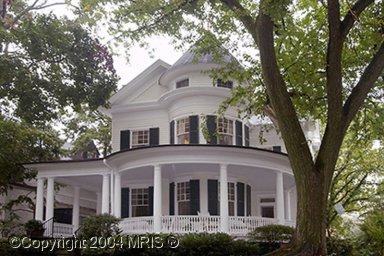 I live in the Cleveland Park section of Washington, which spreads throughout the northern part of the District of Columbia. The neighborhood first attracted residents because it was the high ground -- blessed relief from the swampy heat of Washington summers. In fact, Cleveland Park got its name from President Grover Cleveland, who bought a country "cottage" in the area in 1886. Similar "cottages," with their wraparound porches built to catch the cool breezes, still line the streets of Cleveland Park. I have lived in this neighborhood for about 23 years -- almost as long as I lived in my hometown of Philadelphia. I know each block, each apartment building. There has been little building here on upper Connecticut Avenue in the last decades, and I have the illusion of having put down roots here. There is a synagogue in the neighborhood, Adas Israel, a large conservative congregation to which many illustrious Jews belong. They know me in some of the stores but not in any of the restaurants. I never eat out. I am a minimalist. I haven't been to the movies since 1992, though the neighborhood theater, The Uptown, features first-run movies. Movie premieres that take place in Washington always happen at the Uptown. In the late 1990s former President Clinton attended a movie premiere at The Uptown. I stayed away from the theater that night. My presence near the President of the United States would make the Secret Service apprehensive. I have, in fact, been investigated by the U.S. Secret Service as a potential threat to the President. But we won't go into that.


