A blog devoted to the actors and public policy issues involved in the 1998 District of Columbia Court of Appeals decision in Freedman v. D.C. Department of Human Rights, an employment discrimination case.
I am a spiteful man. I am an unattractive man. I believe my teeth are rotting. I refuse to consult a dentist from spite. I am perfectly well aware that I cannot "pay out" the dentist by not consulting him; I know better than anyone that by all this I am only injuring myself and no one else. But still, if I don't consult a dentist it is from spite. My teeth are bad, well--let them get worse! I sometimes think I am not a man at all, but a mouse. There in its nasty, stinking underground home our insulted, crushed and ridiculed mouse promptly becomes absorbed in cold, malignant and, above all, everlasting spite.
When people approach me I grind my teeth at them, and feel intense enjoyment when I succeed in making anybody unhappy. I was lying when I said just now that I was a spiteful man. I was lying from spite. I am simply amusing myself with people and in reality I never would become spiteful. I am conscious every moment in myself of many, very many elements absolutely opposite to that. I feel them positively swarming in myself, these opposite elements. Even in my underground dreams I do not imagine love except as a struggle. I begin it always with hatred and end it with moral subjugation, and afterwards I never know what to do with the subjugated object.
Even in toothache there is enjoyment. The enjoyment of the sufferer finds expression in moans. They express the consciousness that you have no enemy to punish, but that you have pain; the consciousness that you are in complete slavery to your teeth; that if someone wishes it, your teeth will leave off aching, and if he does not, they will go on aching another three months; and that finally, if you are still contumacious and still protest, all that is left you for your gratification is to thrash yourself or beat your wall with your fist as hard as you can, and absolutely nothing more. Well, these mortal insults, these jeers on the part of someone unknown, end at least in an enjoyment which sometimes reaches the highest degree of voluptuousness.
Yes, I am a spiteful man, and I write these words out of spite, in order that I might be spiteful. My aim is to make you uneasy, my readers, out of spite.
Now I have a secret, and it is like an illness. My habit of concealment is so highly developed I am able to accommodate it. But is is painful--hiding it, living with it. The secrecy re-creates the multiple lives that I am used to. But it is not simple, and it is not the game I had invented as a teenager. I am fifty-two. I know that a double life, a life of multiple personalities, is not an alternating existence of first one then another, like an actor changing clothes. It is both lives, multiple lives, felt and led simultaneously.
And so all the time I am Gary Freedman, watching television or listening to music; going to the library or reading a book; or walking down the street or telling my therapist stories or making plans or fantasizing about making love--all that time, the secret twitches within me.
I believe that others too lead multiple lives. Complex people playing multiple roles. Like myself there are people who are explorers and criminals, suicidal psychotics and saints, political prisoners and statesmen, actors and men of the cloth. We do not will these beings into existence. These multiple personalities emerge of their own accord. They are directed by our unconscious wishes, fantasies, conflicts and prohibitions. Psychic complexity cripples some lives and enriches others.
The multiple personalities of my self make me especially sensitive to the multiplicity of others.
Identity diffusion, like the gift of empathizing, central to such diverse arts as psychotherapy and playwriting is little understood. The special kind of imagination that permits one to imagine another, to put himself in the place of another, involves at the very least some experience of incompletion on the part of the "I," with some hope of closure by way of identification with the "thou," thus often thought in Western culture as a feminine quality. But there is more than this. There is a diffusion of identity to accommodate--an inner gallery of characters, and there is a detached witnessing of the entire process. Put to creative use, such a gallery may issue in the career choice of writer, actor, playwright, or any other artist. Given different dimensions, the outcome may be the practice of psychotherapy. With less good fortune, a self-effacing, indecisive chameleon emerges, with a chronic sense of weakness, suggestibility, fraudulence, or hypocrisy. I myself have ultimately known all these uses of my extraordinary state of multiple selves.
A friend of mine, a Canadian blogger, posted the following interview questions on his blog, Evydense. I will attempt to answer the questions as best I can.
Interview questions for Gary Okay, better late than never. . . . sorry about that. Gary asked me for 5 questions for him for this interview thing that's going around. Gary lives in Washington D.C. and spends a part of pretty much every day in the library. He loves books, reading, classical and opera music, and is a fairly keen observer of people. His mastery of English and his extensive vocabulary is a trademark of virtually all his blog entries. He is blunt! He suffers from schizoid personality disorder which has a big impact on his life and activities, and is the main reason he is not employed. His Jewish background is clearly an important part of his life, and is a topic he frequently writes about. To get a good flavor, visit his blog here.
Without further ado, here are my questions for you. If you think any of these questions are self-destructive, the secretary will disavow any knowledge of your existence! Good luck with the mission.
1) You have pointed out that you have made it as a Wikipedia entry. Do you have any particular reaction to that? The entry deals with "Jewishness". Could you identify a few illustrations or examples in your life that were specifically centered around your Jewish roots, background and heritage?
My reaction to being referenced in Wikipedia is "it's about time." Fame is due me. Next comes world domination and the Nobel Prize.
I can't really identify illustrations or examples in my life that were specifically centered around my Jewish roots, background and heritage. I am only half-Jewish, first of all. My mother wasn't Jewish. I was not raised in the Jewish religion. I identify with the Jewish people and their historical struggles.
To answer the question more fully I rely on the comments of Sigmund Freud about his ties to the Jewish people: "It was to my Jewish nature alone that I owed two characteristics that had become indispensable to me in the difficult course of my life. Because I was a Jew I found myself free from many prejudices which restricted others in the use of their intellect; and as a Jew I was prepared to join the Opposition and to do without agreement with the 'compact majority.'" Comparable language is employed in Freud's "Autobiographical Study." Some twenty years earlier (1903), he advised the music critic Max Graf upon the birth of his son Herbert (aka Little Hans): "'If you do not let your son grow up as a Jew,' he said, 'you will deprive him of those sources of energy which cannot be replaced by anything else. He will have to struggle as a Jew, and you ought to develop in him all the energy he will need for the struggle. Do not deprive him of that advantage.'"
I suppose these remarks are a little cryptic, but that is my response to your question.
2) Writing is clearly not only one of your strengths, but one of your primary interests based on what you write in your blogs. What writings have you done that you think have sustained themselves as your 'best' writings, what were they about, and if you know, about how old were you when you wrote them and what frame of mind were you in? If that's too fuzzy or ambiguous a question, how about this one instead. What motivates you to write?
I believe my best writing, the writing I am most proud of, is my legal writing. One example is posted on one of my blogs. You can check it out at:
I am also proud of my autobiography, SignificantMoments. It is this writing that is referenced in Wikipedia. I worked on it for eleven years, from 1993 to 2004. Although it is written entirely in the form of quotations from published material, it is, in my opinion, highly original and deeply personal.
What motivates me to write is the desire to discover myself. To learn about my unconscious wishes, conflicts and prohibitions. Writing is a process of discovery for me. 3) Your background and interests in music lean towards what a lot of folks would consider to be 'refined' music. When listening, do you "dissect" the compositions as if they were musical stories, and consider the pieces and how they fit together, or do you hear it as a continuous, inter-dependent wholeness? Do you have a favorite opera or two, and why are they your favorites?
I just listen to the music and enjoy. My deepest enjoyment in life comes from music, not from interaction with other people. My favorite operas are by Wagner: Gotterdammerung and Parsifal. I love Gotterdammerung for the majesty of the orchestral writing. I love Parsifal because of its deeply personal message, a message that I identify with. Contradictory feelings of hopelessness and ultimate hope permeate the work as they do my own life.
4) You also talk a great deal about your childhood, your growing up experiences, the old country attitude of your parents and how you perceive that it has affected you. What are some of your 'warm fuzzy' memories from your childhood? I have no warm, fuzzy memories of my childhood. What I do recall with fondness is that we used to go to Atlantic City, New Jersey (a beach resort) two weeks every year, coincidentally, at the beginning of July. I loved the beach and I thought that Atlantic City was the most exotic place on earth. In childhood, I looked forward to our trips to Atlantic City all year.
5) If you had a chance to do it all over again, what would be one or two major choice differences that you would make and why?
First, I would have studied harder in high school. I did poorly in high school. I attended a school for academically-talented students that was very demanding. I had the ability to perform well, but I was lazy. Second, I would have chosen a major other than journalism in college. I don't know what I would have chosen, but it certainly wouldn't have been journalism!
Have fun . . . hope they're ok for you. I hope and trust you know that if I have inadvertently crossed lines here, you can just ignore the question (or better still, chew me out as part of your response!!) Don't forget to post your answers on your own blog, and include the 'official rules' at the bottom of your post. PEACE.
Sometimes we act, go in and out, do this and that, and everything is easy, casual, and unforced; seemingly it could all be done differently. And sometimes, other times, nothing could be done differently, nothing is unforced and easy, and every breath we take is controlled by some outside power and heavy with fate.
What we call the good deeds of our lives, the ones we find easy to tell about, are almost all of that first, easy kind, and we easily forget them. Other acts, which we find hard to talk about, we never forget; they seem to be more ours than others, and they cast long shadows over all the days of our lives.
Until October 1991, I worked as a paralegal at a large Washington, DC law firm. In late October I took it upon myself to complain to the firm's managers that I was a victim of job harassment carried out by my coworkers. Following a perfunctory investigation, the employer decided to terminate my employment. The employer alleged that it had concluded, in consultation with a psychiatrist, that I suffered from a delusional mental disorder that might be associated with a risk of violence. The reasons for the termination were clearly fabricated by the employer, a convenient sham concocted to provide some legal basis to an otherwise baseless action.
My performance evaluations during my three-and-one-half years of employment were outstanding. My ability to work with others was rated at least average or above-average; one of my evaluations described me as a "team player."
I spoke by telephone with the psychiatrist who, the employer alleged, had advised that I suffered from mental illness. She denied ever talking to the employer, and said, further, that she would never offer a professional opinion about someone she had not seen in private consultation.
I vowed to fight the job termination, and that decision still casts a shadow over all the days of my life. Perhaps I should have forgotten about my unhappy experience at the firm and moved on with my life. Perhaps I should have put all my energies into finding alternative employment. I didn't. I took legal action against the employer, convinced that the facts and the law were on my side. I was sure that ultimately I would prevail and that my employment would be reinstated. It was a decision that was heavy with fate.
For the next seven years, my case was stalled in the District of Columbia Court system. I had originally filed a lawsuit in 1993 in the Court of Appeals. That case was dismissed a year later for lack of jurisdiction. Eventually, I filed the case in the Superior Court. I lost. I appealed again to the Court of Appeals, and finally, in September 1998--after seven long, Dickensian years involving numerous procedural maneuvers worthy of the fictional Jarndyce and Jarndyce (you are familiar with Bleak House, my friends?), I lost the case that itself had been lost in endless litigation.
I had squandered seven years of my life, which I now find difficult to talk about: seven bleak years that I will never forget or retrieve.
In 1993 I was awarded disability benefits by the U.S. Social Security Administration, which, for the last thirteen years has been the source of my income. I have been unemployed for more than fourteen years. Finding another job now, at age fifty-two, will be difficult. In late 1991 I bargained with my future and I lost. Yet seemingly, at the time, I felt as if I could not do things differently; it was as if every breath I took was controlled by some outside power over which I had no influence.
It is only now, after the battle has long been lost that I see that I made poor decisions, and that my life would have been markedly different today had I allowed myself, years earlier, to consider other available options, options that I did not pursue.
I am an artist. Yes, I am an artist, even if I fail to bring forth a single work of art. I lack the practical skill and the theoretical basis to be a musician, painter, or sculptor and the general, historical, and linguistic education for poet and philosopher. Well, the skills might be acquired; the rest I have. It seems too late for acquiring these skills systematically, moreover, beginning in youth, because of ignorance, and at ripe manhood, because of knowledge, I have lacked perseverance and focus on a small area. I am a miniaturist at heart.
My mind is a cornucopia, overflowing with ideas and interests, and brimming with a Wealth of Notions. Instead of choosing an art, I study the artist type, that is myself, one who has a creative gift and drive even if I never produce a work of art in the conventional sense. Self-consciousness, I say, is the artist's only good fortune.I will tell you who I am, from A to Z -- or at least to W (we free spirits and intellectual vagabonds don't always make it all the way to Karlsbad, so to speak).
I Accept disorder, and, yes, I am Withdrawn. But I am altruistic, energetic, industrious, persistent, self-assertive, and versatile. Then too, I am attracted to the mysterious, I defy conventions, am independent in judgment and thinking, and have oddities of habit. Some would say I am radical. It's true I can be discontented, I can disturb organization, and I am a fault-finder. I make mistakes, am stubborn, and temperamental, and so on. But that's who I am.
On a warm night in June I went to the zoo, sat on one of the benches, and drank from a bottle of iced tea. Two visitors came up beside me to drink as well. This is hardly amazing, I thought, and who would even note such a thing? The visitors eyed me from time to time, glancing and nodding. I felt the need to respond, so I nodded, too, but haltingly, as though not really wanting to be seen. The visitors must have sensed that I was holding back. They moved slightly away. Then I thought they might have known me in another life--the one in which I was a poet. They might have even read my poems, for back then, in that shadowy time when our eagerness knew no bounds, we changed styles almost as often as there were days in the year.
A Room with a View is a 1908 novel by English writer E. M. Forster, about a young woman in the repressed culture of Edwardian England. Set in Italy and England, the story is both a romance and a critique of English society at the beginning of the 20th century. Merchant-Ivory produced an award-winning film adaptation in 1985.
I have a psychoanalytical theory about the story, a summary of which follows. The story's main characters comprise the mother Marian and her two children Freddie (about 18 years old) and a daughter named Lucy (about 20 years old). There is no father; he has presumably died before the story begins. A second grouping comprises an old man, Mr. Emerson and his son George, who pursues and eventually wins over the affections of Lucy. George's mother has apparently died before the story begins. An additional character, Lucy's on-again off-again fiancee, Cecil Vyse, has analytic significance.
It is my proposition that the three young males are in fact dissociated or split images of a single son figure. George is passionate and sexual. He represents the Oedipal self in competition for the affections of Lucy. Cecil is an intellectualized, asexual self -- who gives up Lucy without a struggle. Lucy's brother, Freddie, is a pre-Oedipal self and is depicted in the novel as playful and close to his sister.
Seen in this light, Marian (the mother of Lucy and Freddie) represents the pre-Oedipal mother. Lucy represents the Oedipal mother, who is the object of sexual rivalry. Mr. Emerson represents the pre-Oedipal father. And the sexual George represents an Oedipal self.
The story can be seen as symbolizing a struggle with an incest boundary. Cecil represents an asexual, ascetic, intellectualized defense against Oedipal sexuality. While George represents the expression of Oedipal sexuality. Brother Freddie represents the pre-Oedipal self -- playful and protosexual.
If one views Marion Honeychurch as representing a prototypal mother figure and views the old Mr. Emerson as a prototypal father-figure, then the sexual self (George) obviates incest impulses by his being the actual son of a father figure (Mr. Emerson) who is not in fact the father of George's sexual interest, Lucy Honeychurch. Lucy's actual brother, Freddie, is, analytically-speaking, at a pre-Oedipal (nonsexual) stage. And Cecil represents an asexual, ascetic defense against sexual desire.
That an incest-boundary conflict is an important feature of A Room With A View is strongly suggested by the following:
Though Freddie and Lucy are brother and sister, their closeness, at times, evokes the intimacy of lovers. While the sexually-clueless Cecil and Lucy are engaged to be married, the chaste quality of their relationship suggests the emotional distance of a brother and sister. And while Lucy Honeychurch and George Emerson are in fact lovers, at a symbolic level they are brother and sister; the prototypal mother figure Marian Honeychurch complements the prototypal father figure of old Mr. Emerson.
Finally, it is interesting that Lucy and Freddie Honeychurch, Cecil Vyse, and George Emerson are the children of incomplete nuclear complexes. Lucy and Freddie live in a world without a father; Cecil lives in a world without a father; and George Emerson lives in a world without a mother. The story appears to be a creative transformation of E.M. Forster's psychological struggles as a boy whose father died when Forster was a baby and who was raised by his mother and paternal aunts, people who had radically different world views. The story suggests that Forster never developed an integrated image of mother and father--his perception of mother and father remained split and compartmentalized. The tender and conflict-free relationship between George Emerson and his elderly father in the story suggests that Forster had an idealized image of a father-son relationship that was a product of fantasy and not lived experience.
A Room With A View
Part one
Lucy Honeychurch is a young Englishwoman visiting Florence, Italy with her older cousin, Charlotte Bartlett. Dining at their hotel, they complain that their rooms lack the views that they were promised. A fellow pensioner, Mr. Emerson, offers them his and his son's (George) rooms, which have views of the Arno. Charlotte ungraciously refuses, thinking it would place them under an unseemly "obligation." Another guest, an Anglican clergyman named Mr. Beebe, convinces her to accept the Emersons' offer.
Although a bright and talented girl, Lucy is young and not very inquisitive. Her inner passion shows itself only when she plays Beethoven on the piano, impressing Mr. Beebe. He fancies himself less strait-laced than his fellow clergymen, and is intrigued by the contrast between Lucy's emotional piano playing and her mundane life.
Lucy continues to bump into the eccentric Emersons in Florence. Although their manners are awkward and they are deemed socially unacceptable by the other pensioners, Lucy likes them. One afternoon, as Lucy tours Florence on her own, she witnesses a murder. George Emerson happens to be nearby and catches her when she faints. As the two make their way back along the river, they have an oddly intimate conversation. She is puzzled by her new feelings toward George and decides to avoid him. However, on a group picnic to Fiesole, Lucy accidentally stumbles into George on a hillside He kisses her, but they are abruptly interrupted by Charlotte. Charlotte makes Lucy promise that she will never tell anyone, even her mother, of what happened, and the two women leave for Rome the next day.
Part two
In Rome, Lucy spends time with Cecil Vyse, who she knew in England. Cecil proposes to Lucy twice in Italy; she rejects him both times. As Part Two begins, Lucy has returned to Surrey, England to her family home, Windy Corner. Cecil proposes yet again and this time, she accepts. Cecil is a sophisticated and "superior" Londoner who is eligible in terms of rank and class, even though he despises country society.
The local vicar, Mr. Beebe, announces that new tenants have leased a local cottage: the new arrivals turn out to be the Emersons. Fate takes an ironic turn as Lucy's brother Freddy befriends George and invites him to play tennis one Sunday at Windy Corner. Although Lucy is initially mortified at the thought of facing both George and Cecil (who is also visiting Windy Corner that Sunday), she resolves to be gracious. Cecil annoys everyone by reading aloud from a cheap romance novel that contains a scene suspiciously reminiscent of when George kissed Lucy in Florence. George catches Lucy alone in the garden and kisses her again. Lucy realizes that the novel is by Miss Lavish (a writer-acquaintance from Florence) and that Charlotte must thus have told her about the kiss.
Furious with Charlotte for betraying her secret, Lucy forces her cousin to watch as she tells George to leave and never return. George argues with her, saying that Cecil only sees her as an "object for the shelf" and will never love her enough to grant her independence; while George loves her for who she is. Lucy is moved but remains firm. Later that evening, after Cecil rudely declines again to play tennis, Lucy sours on Cecil and immediately breaks off her engagement. She decides to flee to Greece with friends, but shortly before her departure, she accidentally encounters Mr. Emerson. He is not aware that Lucy has broken her engagement with Cecil, and Lucy cannot lie to the old man. Mr. Emerson forces Lucy to admit out loud that she has been in love with his son George all along.
The novel ends in Florence, where George and Lucy have eloped without her mother's consent. Although Lucy "had alienated Windy Corner, perhaps for ever," the story ends romantically with the promise of lifelong love for both her and George.
When I was six years old, it dawned on me in a flash that, with the birth of my brother, Gary, I had been assigned a supporting part while Gary took the leading role in the family.
In my mind's eye I can still see my brother squatting on a white blanket and laughing into the camera. That was in 1954, a few months after my brother was born in late December of the preceding year. The picture was taken at home. Home was in Northwest Philadelphia. My mother was thirty-eight years old at the time. My mother and I were looking at the photograph in that moment's recollection from 1954.
Gary was a happy child, said my mother, looking at the photograph. She didn't say any more, and I didn't say anything either, and looked at Gary squatting on a white blanket and being happy. I don't know what was making him happy, he was alone in the photograph, not clutching a toy and he was still happy. I envied him his happiness, I envied him the white blanket, and I envied him his place in the photo album, too.
Gary was right at the front of the album, ahead of all the other family members, while I was way at the back. And Gary's picture was quite big, while most of the photos I was in were small, not to say tiny. Snapshots taken by my parents with what they called a Box Brownie, and apparently this box thing could only make little tiny photos. You had to look at the photos with me in them very carefully to recognize anything at all.
For example, one of these tiny snapshots was of a pool with several children in it, and one of them was me. All you could see of me was my head, because I didn't know how to swim then, and I was sitting in the water, which came up almost to my chin. And my head was partly hidden by a child standing in the water in front of me, so that the miniscule photo with me in it only showed part of my head right above the surface of the water.
And what's more there was a shadow on the visible part of my head which was probably made by the child standing in front of me, so that the only bit of me you could really see was my right eye. While my brother Gary looked not just happy but important even when he was a baby. On most of the photos from my childhood I am either only partly visible or sometimes not really visible at all.
Everybody else had a childhood, for one thing -- where they were coaxed and coached and taught all the shorthand. Or that's how it always seemed to me, eavesdropping my way through twenty-five years, filling in the stories of normal men's lives. First they had their shining boyhood, which made them strong and psyched them up for the leap across the chasm to adolescence, where the real rites of manhood began. I grilled them about it whenever I could, slipping the casual question in while I talked to them sporadically, furtively.
And every year they leaped further ahead, leaving me in the dust with all my doors closed, and each with a new and better deadbolt. Until I was twenty-five, I was the only man I knew who had no story at all. I'd long since accepted the fact that nothing had ever happened to me and nothing ever would. That's how living in a schizoid prison feels, once you've made your nest in it and learned to call it home. Self-pity becomes your oxygen.
I speak for no one else here, if only I don't want to saddle other people like me with the lead weight of my self-hatred, the particular doorless room of my internal exile. Yet I've come to learn that all our stories add up to the same imprisonment. The self-delusion of uniqueness. The festering pretense that we are the same as normal people are. The gutting of all our passions till we are a bunch of eunuchs, our zones of pleasure in enemy hands. Most of all, the ventriloquism, the learning how to pass for a normal person. Such obedient slaves and role-players we make, with such tidy rooms.
My apartment's vast expanse of congested clutter can be daunting at first, and its population of one difficult to communicate with. After going through customs, you'll see a large area with a couch to the left. Much of My Apartment's "television viewing" occurs here, as does the very occasional fantasies of making out with a girl (see "Festivals"). To the north is the food district, with its colorful cereal boxes and jars of spaghetti sauce.
WHAT TO BRING
A good rule of thumb is "If it's something you'll want, you have to bring it yourself." This applies to water, as well as to toilet paper and English-language periodicals. Most important, come with plenty of cash, as there's sure to be someone with his hand out. In My Apartment, it's axiomatic that you have to grease the wheels to make the engine run.
WHEN TO GO
The best time to travel to My Apartment is typically after most people in their twenties are already showered and dressed at a job. Visits on Saturdays and Sundays before 2 P.M. are highly discouraged, and can result in lengthy delays at the border (see "Getting There and Away").
LOCAL CUSTOMS
The population of My Apartment has a daily ritual of bitching, which occurs in the early afternoon and prior to the preparation of dinner. Usually, meals are taken during reruns of "Seinfeld." Don't be put off by impulsive sobbing or unprovoked rages. These traits have been passed down through generations and are part of the colorful heritage of My Apartment's people. The annual Birthday Meltdown (see "Festivals") is a tour de force of recrimination and self-loathing, highlighted by fanciful stilt-walkers and dancers wearing hand-sewn headdresses.
HEALTH
Rabies and hepatitis have almost completely been eradicated from My Apartment, owing to an intensive program of medication and education. Also, travelers need not be wary of sexually transmitted diseases. Abstinence is the only certain preventative, and it is strenuously endorsed by the My Apartment government. Condoms and antibiotics are available on most evenings (see "Medical Services"). While the population of My Apartment is asexual and celibate, he lives in hope.
The hiss of traffic after rain has sleeked the street.
The chime sounding off the silent library air.
Outside, a kind of monumental, after-afternoon-rain relenting, something loosening and the ground going soft, glistening, the water on it taking in the world, the sycamore drawing water up its roots, the huge trunk sopping it.
In the reading room the vase of daisies: yellow, white, and flaming orange.
Magazines and books, a lit figure bent to her work, lifting her shoulders slowly up and looking out, letting a breath go.
Smiling when the child comes in with a question.
Outside, the spreading yellow maple shedding branches.
A traffic jam on Connecticut Avenue, car horns blaring.
Birds from dawn to dusk at the feeder: black flashings across the blank window.
The cats of Newark Street dazzled, feeling the old hunger.
Now the child is shaping an arabesque by the computer in the children's room; now she is wrapped up in a book, reading; now she's standing up near the librarian, a duchess demanding her cardigan, grinning at the other children -- their carelessness, sulking, crying, laughing around the information desk -- as the light seeps through the Venetian blinds.
As a white man, you can live your whole life never not fitting in. You never walk into a bar that sees only your boobs. To be Whitie is to be wallpaper. You don't draw attention, good or bad. Still, what would it be like, to live with attention? To just let people stare. To let them fill in the blank, and assume what they will. To let people project some aspect of themselves on you for a whole day.
Well, I'm white, but I've never been "white." I've never fit in, I've never been simply wallpaper. I've always stood out. I've always been an outsider and the odd man out. People ask me why I am the way I am. I don't have a good answer. I suppose it comes naturally to me to be different. I was an outsider in my own family, growing up. I adapted to the role of outsider and I seem to seek out that role as an adult. It's close to instinctual for me.
I tend to be passive and unassertive. But I don't just fall into a group dynamic. I'm an aggressive non-joiner, I suppose. I have difficulty acknowledging or expressing anger. But I express that anger in a passive-aggressive way, by standing apart -- by intentionally turning my back on those who anger me.
I'm inhibited and constricted in my emotional life. I have difficulty allowing myself to acknowledge or express wishes and impulses. I'm not a secure outsider, but an insecure one. I tend to feel helpless, powerless, or at the mercy of forces outside my control.
My emotional states are dominated by feelings of futility and meaninglessness. I tend to feel empty or bored. I don't think I've ever been happy -- ever. Not truly happy for an extended period of time. Depression and despondency have been my companions since early childhood, for as long as I can remember.
I don't relate to people emotionally. I have such a limited and constricted range of emotions. I feel inadequate, inferior or a failure. People seem to sense that about me. I also feel listless, fatigued and lacking in energy.
I often wonder where people get their energy. Energy for living, for activities, for pleasure. I always feel so drained. I find little or no pleasure, satisfaction or enjoyment in life's activities.
For as long as I can remember I've felt anxious. Not simply anxious around other people, but anxious all the time, even when I'm alone. Though, yes, I tend to be shy and reserved in social situations.
But above all I feel like an outcast or an outsider, I have never felt that I truly belonged. It's as if in every situation I'm told that this is the wrong place for me, the wrong environment. I am forever being told to go elsewhere. "You're not wanted here, there's some other place where you'd fit in." But I never find that other place. I've been searching for that other place my entire life. And now, in middle-age, I've given up trying. I live the life of a hermit, a recluse.
I had heard of a local society, The Friends of the Friendless that sold friends. They owned the Sorry Sod Social Club and had a Saturday stand at Union Station in Washington. But The Friends of the Friendless specialized in young people. I'd been in contact with young people. They are not people I wanted to befriend. I wanted a proper friend, a middle-aged one. Could The Friends of the Friendless procure for me a middle-aged friend?
Well, yes, they probably could. My neighbor had friends, and he told me that if I ordered one before it was befriended by someone else the friend wouldn't have to be inspected by the Department of Social Relations, a little known federal agency established in the waning days of the Clinton Administration to ensure that anyone who wanted a friend would have a decent friend. This, people said, was a good thing. In effect, it was explained to me, I'd be buying a well-seasoned friend with lots of life experience -- "Think of a friend as a pet" -- rather than a purchased friend sold by The Friends of the Friendless. (The social logic of the Department of Social Relations is based on a belief that all government agencies are good, even if they were established to oversee the buying and selling of friends, which you would have thought was good in any event.) But when I appeared the following Saturday the prospective friend that was offered up for sale was definitively a loser, dressed in cutoffs and a threadbare T-shirt that reeked from beer and a lack of basic hygiene: a large-sized fellow, about two-hundred-twenty pounds, about six feet tall, with a little too much on view, including a pot-belly that was ill-concealed by the aforementioned noisome T-shirt.
The challenge was getting the friend to come to my home to hang out with me. The decrepit state of the individual insured that every passerby knew what I'd bought. He was not your normal parcel of urban shopping. It was not a normal Union Station purchase, either, and many people looked at me as though I were a bad man to have purchased another human being to ensnare him in the bondage of friendship. One woman stood in front of me with her arms across her chest in open disapproval. I was tempted to make small conversation with my new acquisition against the street lamp pole. ("Mind if we chat here for a few minutes to give the impression that we're old friends blathering it up at this intersection?")
I don't own a car. How would I get my new friend home? Flag a taxi, of course. I waved down a cab and the two of us got in. I, the picture of good hygiene and unquestionable sobriety and my newly-purchased friend, the ill-smelling lout. The three of us -- I, my friend, and the driver -- precariously poised, putted home. I asked the driver to park in front of my building, and, urging my new friend on, staggered to the door, musing, Is there a law against this?
The front-desk manager, Tim Norton, welcomed us with the delight of an unapologetic social-climber, and we stepped into the elevator. But, before we descended (I live on the ground floor), a problem appeared in the Saturday morning dress of a K Street lobbyist, who had come in behind us.
"Gary, do we want another passenger?" I was struggling. Two hundred pounds was akin to a big man. What's more, things had gotten worse for my new acquisition, with beads of sweat dripping down his brow, the T-shirt itself soaked in bodily fluids.
It was a summer day in a small elevator: the front desk manager, the K Street lobbyist, and my friend. The lobbyist turned. I don't know why. Maybe he smelled something, although the smell, as these things go, wasn't bad. He conducted an inventory of the details of my new acquaintance, and when the door opened he exited with considerable dispatch.
"Did you hear the sound he made?" Tim Norton asked with undisguised glee. I had heard it and was distressed. I had been uncomfortable in Union Station. Now I'd made my neighbor sick.
I deposited my friend on the living room couch. I reflected on the difficulty of bringing a purchased friend to one's home. I hadn't wanted to upset my neighbor. I didn't know him well but gathered (from Tim Norton, the front desk manager) that he, too, was a sociable man who knew the value of friends. My friend was a more elementary form of friend he'd been socializing with for years. The realization confirmed something I'd always suspected: people don't want purchased friends. They don't think of people as something to purchase. They think of friends as the outcome of chit-chat and banter that grows into something of at least semi-permanent status. But I, unsociable sod that I am, am incapable of small talk and convivial colloquy, so I have to purchase my friends at the market.
Yes, my friendships are, by necessity, subject to the capricious vicissitudes of the marketplace and therefore beyond my control. At least my new friend didn't cost all that much. And by the terms of the sale, he was mine forever, or until I could no longer endure the odor.
In the summer of 1983, at the age of 29, I moved to Washington, DC and entered the Master of Laws Program at American University Law School. This wasn't exactly the culmination of a lifelong dream. I'd come to Washington to become managing partner of a major law firm, and, in fact, I'd been signed two years earlier as a law clerk by Sagot & Jennings, one of the more reputable law firms in Philadelphia. I thought the line from law clerk to managing partner would be straight and short. But other than occasional rejection letters, I wasn't making much progress, and I was beginning to wonder why I'd ever left Philadelphia, Pennsylvania.
Philadelphia's not hard to find on the map. That's where I'd been born and raised, and my family -- what's left of it, still calls it home.I missed them - my family, I mean. And I missed big-city life. I barely knew a soul in Washington, which at that time, back in the early 80's, was just a sleepy Southern town. Actually, I didn't know anybody. I was renting a one-room apartment in Cleveland Park. The previous tenant had been the Spanish Embassy. I could still smell the Arroz con Pollo when I first rented the place.
Washington is very tough on lonely people. When my classes ended at American University, I'd walk the 20 or so blocks from Scott Circle to my apartment in Cleveland Park, and see all these happy couples on the street, arm in arm or hand in hand, smiling and cooing at each other, and I wondered when it was going to be my turn. I wanted to be happy too. At night, I'd look at all the lit-up windows in the surrounding high-rises--millions of them (or do I exaggerate?)--and I'd imagine all the happy people sitting down to dinner, watching a romantic movie on TV, then crawling into bed to make love for hours on end. When you're lonely, you tend to think you're the last lonely person in the world. You can't even imagine that there are other people out there--single people, couples, even married people--who are just as lonely as you are. But they're out there, of course. They're everywhere.
Some of them even stayed at 3801, where I lived. There were women who would slip me their phone numbers, asking me to please call, they were available. And there were lonely men, too. I remember one tenant in particular, a man in his late forties - we'll call him Stanley S.: he always buzzed the front desk just as I entered the building after classes and asked the clerk to please send me up with the afternoon papers. This was in the days before Tim Norton manned the front desk. It became something of a running joke at my building: "It's Gary's boyfriend again, pining for him." I'd go upstairs, newspapers in hand, and he'd open the door in the buff and ask me to come in."I can't," I'd say. "I'm sorry.""Oh please, Gary. Just for a minute or two. You're so handsome.""No," I'd repeat. "I'm in training for the priesthood and I only do it with young boys." I lied of course. I wasn't in training for the priesthood and I didn't do anything with young boys. And he'd look at me with those big puppy-dog eyes, like he was about to cry or something, and ask if I was sure. "I'll do anything, Gary. Anything at all, Just say the word. Tell me what you want. Spell it out."
To be honest, I felt kind of bad for the guy, I could relate to that kind of loneliness. I was meeting people here and there, sure, but I couldn't afford to go out. Anyway, that was twenty years ago. I'm still lonely, still on the brink of despair, running from dark place to dark place. You know the drill. Psychologically, I'm one of the walking wounded. That's why I always carry a pen in my right hand. I always carry a pen in my hand in case I come up with another idea for something to write. Some new, previously undisclosed, painful memory of which I need to unburden myself.
My life is just one miserable patch of painful experiences. It's so sad, so lonely. I guess I just never learned how to connect with people. I'm just one sorry, lonely, sod.
The word "safari," in Swahili, means "journey"; it has nothing to do with animals. Someone "on safari" is just away and unobtainable and out of touch. The same might be said, I suppose, about a person who has entered a state of meditation or a psychotic state. The person who embarks on a state of mediation or who has become psychotic has entered an intrapsychic world that is unobtainable and out of touch.
Out of touch in my inner world is where I want to be. The wish to disappear sends many people to meditate or to wish for insanity. If you are thoroughly sick of being kept waiting at home or at work, meditation or psychosis is perfect: let other people wait for a change. Meditation or severe mental illness is a sort of revenge for having been put on hold, having to leave messages on answering machines, not knowing your party's extension, being kept waiting all your working life -- the homebound writer's irritants. Being kept waiting is the human condition.
I thought, Let other people explain where I am. I imagined the dialogue:
"When will Gary be back?"
"We don't know."
"Where is he?"
"We're not sure."
"Can we get in touch with him?"
"No."
Meditation or severe mental illness, the journey through one's intrapsychic world, can also be a sort of revenge on cellular phones and fax machines, on telephones and the daily newspaper, on the creepier aspects of the modern world that allow anyone who chooses to get his insinuating hands on you. I desired to be unobtainable. In the novel Heart of Darkness, Joseph Conrad depicts Kurtz, sick as he is, attempting to escape from Marlow's riverboat, crawling on all fours like an animal, trying to flee into the jungle. I understood that.
I was going on a journey to my intrapsychic world for the best reason -- in a spirit of discovery; and for the pettiest -- simply to disappear, to light out, with a suggestion of I dare you to try and find me.
Work (when I worked, that is) had become a routine, and routines make time pass quickly. I was a sitting duck in my predictable routine: people knew when to call me; they knew when I would be at my desk. I was in such regular touch it made having a job a mode of life I hated. I was sick of being called up and importuned, asked for favors, hit up for money. You stick around too long and people begin to impose their own deadlines on you. "I need this by the twenty-fifth" or "Please read this by Friday" or "Try to finish this over the weekend" or "Let's have a conference call on Wednesday." Call me, fax me, e-mail me. You can get me anytime on my cell phone, here's the number.
Being available at any time in the totally accessible world seemed to me pure horror. It made me want to find a place that was not accessible at all: no phones, no fax machines, not even mail delivery, the wonderful old world of being out of touch. In other words, gone away.
Sure, I would still receive calls, faxes, and telephone calls. But I could ignore them if I chose to do so. I would live life on my own terms. If I chose to ignore the ringing telephone I could safely ignore it.
All I had to do was remove myself. I loved not having to ask permission, and in fact in my domestic life things had begun to get a little predictable, too -- Gary Freedman at home every evening.
I wanted to drop out. People said, "Get a cell phone, use FedEx, sign up for Hotmail, stop in at Internet cafes, visit my Web site . . . "
I said no thanks. The whole point of my leaving was to escape this stuff, to be out of touch. The greatest justification for becoming unobtainable through a persistent meditative state is not self-improvement but rather performing a vanishing act, disappearing without a trace. As Huck put it, lighting out for the territory.
One's inner world is one of the last great places on earth a person can vanish into. I wanted that. Let them wait. I have been kept waiting far too many times for far too long.
I am outta here, I told myself. I would become unobtainable by reason of psychosis. A journey to one's inner world from which there is no escape.
I have resolved on an enterprise which has no precedent, and which, once complete, will have no imitator. My purpose is to display to my kind a portrait in every way true to nature, and the man I shall portray will be myself. Simply myself.
If I have written much of it in the third person, well, that is because such an obsessive account of my intrusion into this valley of suffering forces one, like Dorian Gray, to confront his own "devilish, furtive, ingrown" self-portrait. The pronoun he gives a blessed bit of distance between myself and a too fresh ordeal in which the use of I would be rather like picking off a scab only to find that the wound had not completely healed.
In the career of the most unliterary of writers, in the sense that literary ambition had never entered the world of his imagination, the coming into existence of the first book is quite an inexplicable event. In my own case I cannot trace it back to any mental or psychological cause which one could point out and hold to. The greatest of my gifts being a consummate capacity for doing nothing, I cannot even point to boredom as a rational stimulus for taking up a pen.
What kind of person am I? What is so special about me?
I am an assimilated Jew, content to be assimilated, relieved to be religiously unobservant. I don't know any Hebrew, or have forgotten the little I once learned.
Speaking personally, I find that the American experience of being an assimilated grandchild of Orthodox immigrants has tended to make me an ill-informed, nonbelieving, non-observant Orthodox Jew, haunted by nostalgia for the peculiar music of the synagogue, for the Judaism I do not practice. And this adds still another puzzling iridescence to my Jewishness and to the tantalizing opportunities of my writer's divided self.
Since these pages, if they survive me, may be the last testament of my brief and insignificant passage through the world, let me scrawl out the main facts:
I come from an unbroken line of infidel Jews. My father was a Voltairian. My mother was pious, but one day my father took me out for a walk, a walk in a little neighboring wood, I can remember it perfectly, and explained to me that there was no way we could know that there is a God; that it didn't do any good to trouble one's head about such; but to live and do one's duty among one's fellow man.
I know my own heart and understand my fellow man. But I am made unlike any one I have ever met; I will even venture to say that I am like no one in the whole world. I may be no better, but at least I am different. Whether Nature did well or ill in breaking the mould in which she formed me, is a question which can only be resolved after reading my writings.
I could never have appreciated how obscure my family was when I was growing up. A poor family in northwest Philadelphia, too hot in the summer, and too cold in the winter. I thought we were big time. I thought we were important people. I thought the world really revolved around my family. We had this way of understanding everything. There was nothing my father could not explain. And even if it was bad, we always knew what was happening. It was a terrible strain, but I began to understand that it was worth it. We had no modesty, any of us. We were fierce in our self-importance. We were really important to ourselves. Our lives were important and what happened to us was important. The day's small plans and obligations engrossed us. Going to school. To work. Shopping. My father going to union meetings every two weeks on Thursday nights. It was all terribly important. And so when, in adulthood, I took a shit job at one of the largest law firms in the country that was managed by a close friend of the President of the United States and the former Ambassador to Russia it seemed plausible that these important people had taken an interest in me. It was not delusional. It did not have the vapid essence of illusion. It was real. It was substantial. I was important. It was like the world had finally agreed to what I always knew that we were important people. Recognition was just. It was more than just, it was unsurprising.
But where we lived, growing up, always seemed to me the essence of obscurity. In northwest Philadelphia connected rowhouses fill each city block. Two stories high they line the streets mile after mile. Kids grow up around doorways, on stoops, in courtyards. And in the dark living rooms with their wooden floors, and aging decrepit furniture. One block after another. Miles of rowhouses with their rooms of cooking smells and their armament of garbage cans at the curb. From the prominence of our little house on Seventeenth Street I could see around the ranks of rowhouses. Beyond my sight I knew there were more streets, more rowhouses interspersed every fifteen or twenty blocks with a red castle of a school just like mine. Surrounded by this monotony of architecture, we were protected from worse things -- storms, fireballs, the marches of ants, floods from the sky -- nothing in this part of the world being worth such energy, such destruction. I had it all worked out. We were important in this world of the obscure and the routine.
Subject is a 50-year-old male. He has been unemployed and profoundly isolated for years. Other than consultations with mental health professionals, subject has no social contacts of any kind with family, acquaintances, or friends.
Years earlier, while subject was employed, he had several acquaintances whom he would have liked to befriend. Each of the acquaintances was acutely ambitious, inner-directed, intelligent, idealistic, and independent in thought and action.
Subject is highly intelligent, verbally fluent, and creative. He devoted about ten years of his unemployment writing a lengthy autobiographical study that was unusual in structure. The content of the writing features subject's identification with historical and literary figures who were compulsive letter writers; who developed exclusive, idealized friendships; whose privacy rights were violated; and who struggled with the experience of loss, exile or banishment. Subject visits his neighborhood library daily.
Subject has a paranoid fantasy that the library manager is in daily communication with his former employer, a local law firm. Subject believes that the employer informs the library manager of subject's personal goings on, and that the manager reports back to the employer on subject's activities at the library. For some years subject had a vague notion that the manager might one day become his friend. Subject imagines that the manager likes him and that the manager would welcome a social overture from him. Subject imagines that he receives subtle cues from the manager that the manager feels some personal connection with subject.
The manager appears to be a highly intelligent, underachiever who has little in common with any of his colleagues at the library. The manager is in his mid-forties, married, but childless.
Subject imagines that the library manager is an individual who, from early life, had strong ambitions for success, fame, and independence, but that his early dreams and promise were not realized. The manager has worked his entire adult life in libraries, and subject imagines that the manager has severely repressed feelings of dissatisfaction with his life.
At some point, many years into subject's unemployment, subject begins to write daily letters to the manager and save them on the public computer's hard-drive. Subject discusses in these letter his thoughts and feelings; the tone of the letters is friendly, informal and at times humorous. Subject imagines that the manager reads the letters and finds them interesting and entertaining. Subject further imagines that the manager transmits copies of the letters to the subject's former employer who, subject imagines, retains a personal interest in him.
At the point subject begins his letter writing activity, his feelings for the manager grow in intensity. Subject becomes obsessed with the manager, who dominates subject's thoughts. Subject begins to experience a feeling "of mounting self-confidence to the point of excitement and feeling as though" he and the library manager will become friends, possibly close friends.
After a year of this letter writing activity, the manager summons the police to request that subject be ejected from the library and that he be banned from the library for a period of six months. The manager tells the police that he had chanced upon a letter that subject had written and saved to the computer hard-drive. In the manager's opinion the letter is threatening in tone and evidences a disturbed mental state. The police do not concur with the manager's assessment of the letter, but agree to enforce the manager's request that subject be banned from visiting the library.
Subject willingly honors the police action, but continues to write letters to the manager that he transmits to subject's own e-mail account. Subject imagines that unidentified persons continue to read the letters. Subject continues to imagine that he and the library manager will someday become friends, though he understands realistically that this will probably not happen. Subject remains suspicious of the circumstances underlying the manager's action in having subject banned from the library. Subject responds emotionally to the ban with feelings of "anxiety, anger, confusion, and humiliation."
Subject is convinced that the manager lied to the police when he told them that he, the manager, had read only one of subject's letters. Subject imagines that he was the victim of a personalized vendetta by the library manager, whose actions (so subject believes) were prompted by irrational psychological motives that centered on the manager's own repressed feelings about subject.
GARY FREEDMAN: Cookie, you're a definite artist. They should put your lips in the Smithsonian.
COOKIE WILLIAMS: It took you awhile. I didn't think you'd make it.
GARY FREEDMAN: I was having a little problem focusing. Finally, I got the right fantasy. I thought of a woman I saw on Pennsylvania Avenue and I coupled her with Svetlana Stalin. It's the daughter of the dictator. It worked.
COOKIE WILLIAMS: What do you take medicine for?
GARY FREEDMAN: Me? Depression.
COOKIE WILLIAMS: What are you depressed about?
GARY FREEDMAN: Depressed. Don't you ever get depressed? Doesn't your work get you down?
COOKIE WILLIAMS: It's okay. Beats the hell out of waitressing.
GARY FREEDMAN: It's funny. Every hooker I meet says it beats the hell out of waitressing. Waitressing's got to be the worst fucking job in the world. It's unbelievable.
COOKIE WILLIAMS: What are you sad about?
GARY FREEDMAN: I'm spiritually bankrupt. I'm empty.
COOKIE WILLIAMS: What do you mean?
GARY FREEDMAN: I'm frightened. I got no soul. Know what I mean? See, when I was younger, it was less scary waiting for Lefty than it is waiting for Godot.
COOKIE WILLIAMS: You lost me.
GARY FREEDMAN: You know that the universe is coming apart? You know what a black hole is?
COOKIE WILLIAMS: Yeah. That's how I make my living.
GARY FREEDMAN: I gotta tell you, a great writer named Sophocles said it was probably best not to be born at all.
COOKIE WILLIAMS: Honey, it's a little too late for that.
As readers of this blog may be aware, I have an imaginary friend. His name is Brian Patrick Brown. Brian is a real person. He's the branch manager of the Cleveland Park Neighborhood Library in Washington, DC. He's worked at the library since 1988.
For some reason I can't get Kevin Black out of my mind.
Be that as it may.
Tonight my shoes are in the middle of the living room floor. My right and left sock are hanging willy nilly from the front doorknob and bookshelf, respectively. My clothes never left the bathroom once I got out of the tub that incidentally is covered in grungy man film and my own body hair. Were I to invite you on a scavenger hunt in my home right now, I'd challenge you to find a half-eaten sandwich, a three-day weekend's worth of junk mail, empty CD cases and cans of diet soft drink that are only half empty. Or are they half full? In the VCR is a videocassette that dates back to my younger, more sexually-potent days (if you catch my drift) and at the top of my lungs I'm singing along to my downloaded 80s-era (1880s, that is) recordings of Verdi, Wagner, and Rossini.
When those are done I plan to move on to 70s (again, think 1870s) mellow gold. Yes, I'm devolving not just musically but also developmentally. As I write I'm sitting in my throne. For some men the throne is a reclining La-Z-Boy-style chair with cup holders and convenient pockets for the TV Guide and remote control(s). Mine's a bit more streamlined. I bought it a decade ago when it came from Rooms To Go with an identical couch, a coffee table and two end tables complete with generic lamps. The couch, tables and lamps have long since gone the way of garage sales or the trash, but this chair remains. Acquaintences affectionately refers to it as "the plaid chair", but I know it' as the throne. Along with an old Bullwinkle t-shirt, this chair's the only thing of mine in the home that predates my current state of insanity.
Well, OK, there's that VHS collection I mentioned, but I generally keep that hidden away. Ahh, if this chair could talk! Well sure, most of what it would say would be about being covered in stale french fries and spilled kosher box wine but it'd also talk about sexual escapades involving me and . . . that VHS collection I mentioned earlier. Right now I want to shout, shout, let it all out. These are the things I can do without: emissions testing; overdue library book bills; Social Security reform proposals; the lawn that still needs to be mowed in the front of my apartment building; alarms set to go off at 7:28AM; and food stamp recertifications that need to be reported every year.
Wait, where was I? Here in my thrown I fell asleep and dreamed that I ran. I ran so far away. Tracy Lordes, hold me now. Warm my heart. Stay with me. We can dance if we want to. 'Cause your friends don't blog and if they don't blog then they're no friends of mine. It's a safety dance.How embarrassing!You'll have to forgive me.You see, I suffer from My Own E-Hollywood Story Disorder. The visions always start with the same image. I'm wearing a Boone's Farm-stained Bullwinkle t-shirt and I'm sitting in a tasteless plaid Rooms-to-Go-esque chair. Tina Turner walks in and she's my private dancer. Sometimes the music playing is 80s (1980s, this time) glam but any old music will do nicely, thank you. She does what I want her to do which is take on me and take me on.
For a brief moment part of me wonders if I can escape my responsibilities into a world of music video animation where it's better to be safe than sorry. I start to shed tears, but they're only tears for fears, and then I think Hey now. Hey now. Iko iko I, eh?If a picture paints a thousand words, then why can't I paint you? Screw Tracy Lordes. I'm ready for the delusions in my head to go away. I may be climbing on rainbows, but Brian here goes. Dreams, they're for those who sleep. Life is for us to keep. Brian (I'm referring to my imaginary friend, Brian Brown), if you're wondering what this blog is leading to . . . It's leading to where my life is currently leading -- namely, nowhere.
My street in Washington is named for a New England state that is represented in Congress by one Orthodox Jewish senator and another senator who is reputed to be making tentative steps toward embarking on a presidential bid in 2008. It's a long street that traverses Washington, D.C. and wends its way deep into the northern suburbs of the city, way past the beltway. It's Connecticut Avenue, no more or less attractive than any other streets in the District that are named for New England states, though I must say I prefer Connecticut Avenue in Atlantic City where I once purchased three hotels in a ten-hour Monopoly marathon back in the 1960s.
If you didn't know it already, I'm a plagiarist. I plagiarize for fun but without profit. It's a hobby of mine, copying the writings of others and passing them off as the writings of others. I'm an honest plagiarist. There aren't many of those. Most plagiarists copy the writings of others and pass those writings off as their own. Not me. Only the unsuspecting or the dedicatedly stupid would fail to notice the disclaimer at the heading of this blog that proclaims: "This blog features unattributed quotations and paraphrases of published material." Right now I'm plagiarizing or paraphrasing a piece from The New Yorker written by David Sedaris. But the paraphrasing is so thoroughgoing that you'd never know that this post is thoroughly unoriginal. The first sentence of the Sedaris piece, paraphrased above, reads: "My street in Paris is named for a surgeon who taught at the nearby medical school and discovered an abnormal skin condition, a contracture that causes the fingers to bend inward, eventually turning the hand into a full-time fist." (You can look up the piece yourself. It's in the April 18, 2005 edition of The New Yorker, starting at page 92.)
Now that's thorough plagiarizing. It goes beyond plagiarizing, in fact. My piece is more like a jazz riff on Sedaris. A totally inscrutable disguise that is only suggested by the published work.
I've never mentioned it before, but my plagiarizing has made me notorious in Washington, among both natives and tourists. People gather outside my window arguing about the merits of my work, or roundly condemn my linguistic practices, which are seen by some as the gravest of misdeeds -- crimes, really -- that call for nothing less than a sound whipping. I live on the first floor of my apartment building and the voices just below my window are easily heard amid the traffic noises emanating from that street I live on that's named for a New England state.
For some, the arguments are about language. A wife had made certain claims regarding my abilities as a plagiarizer. "I've been reading his blog posts," she said, or, perhaps, "All those bloggers write things that are pretty much alike, so what's the difference if he copies from someone else?" But then people use slang, or ask unexpected questions, using obscene expletives and things begin to fall apart: "He's the one who claims to be a fucking original. He's an asshole." I hear this all the time, and look out my window to see a couple standing toe to toe on the sidewalk.
"Yeah," the woman will say. "But at least he tries to write something that sets him apart from other bloggers. That should count for something in the blogosphere."
"Well, he should try harder, damn it. Nobody wants to read what somebody else has already written."
Arguments about the sources of material are the second most common. People notice that they've read something before and argue about where they've read it. Was it in high school English, in college? What is it that I've plagiarized? Is it Dickens, Chaucer, Shakespeare? These arguments will last about half an hour, then the couple will decide they are tired and hungry and need to find a bathroom. That's the thing about plagiarism. It only concerns people who have nothing else to worry about. If you're tired, hungry, or need to use a toilet facility, someone else's act of plagiarizing has about as much interest as yesterday's garbage. People argue about plagiarism only when they have nothing else to argue about. Plagiarizing and paraphrasing is way down on the totem pole of people's concerns. Get hit with a cancer diagnosis, and I guarantee you, you won't be arguing about whether or not I plagiarize.
"For God's sake, Philip, would it kill you to just ask somebody where you've read this piece before?"
I lie on my couch thinking, Why don't you ask? How come Philip has to do it? But these things are often more complicated than they appear. Maybe Mary Frances was an English major, and has been claiming to have an encyclopedic knowledge of English literature. Maybe she's one of those who refuse to investigate cases of suspected plagiarism lest she appear to be not as knowledgeable as she's always claimed.
The desire to pass as a literary authority is loaded territory, and can lead to the ugliest sort of argument. "You want to be considered to have a vast knowledge of world literature, Mary Frances, that's your problem, but you're just another illiterate." I went to the window for that one, and saw a marriage disintegrate before my eyes. Poor Mary Frances in her beige beret. Back at the hotel it had probably seemed like a good idea, but now it was ruined and ridiculous, a cheap felt pancake sliding off the back of her head. She'd done the little scarf thing, too, not caring that it was summer. It could have been worse, I thought. She could have been wearing one of those striped boater's shirts, but, as it was, it was pretty bad, a costume, really. Yes, here was poor Mary Frances fretting about my supposed plagiarism when she herself looked like a walking caricature. A case of sartorial misrepresentation. She was dressed like every other damned female tourist in Washington and here she was worried about the fact that my latest blog post seemed to resemble something she had read in a tenth-grade English class.
Some vacationers raise the roof -- they don't care who hears them -- but Mary Frances spoke in a whisper. This, too, was seen as pretension, and made her husband even angrier. "Bloggers," he repeated. "They write trash anyway. What's the difference if some blogger outsources his blog posts? Got it?"
I looked at this guy and knew for certain that if we'd met at a party he'd claim to have never noticed my plagiarism. No, he'd never have the balls to do that. He might have to admit that although my blog posts seemed unoriginal, he couldn't quite figure out whether he'd read my material in The New Yorker or in the New York Times travel section. Besides there was the issue of his own attire. How would he explain that some other guy at the party was wearing the exact same necktie.
The inner storm broke in January, When I received a letter from an unknown admirer, Forwarded to me by an acquaintance. Instant Captivation!
I read its seemingly innocuous lines And stopped as if they were a message from another world.
On the surface It was merely a belated accolade for my written musings, But one sentence held me and worked on my imagination:
Until now I've never wished to be another person, Not even for a little while, Until just lately when I found your writings. Then I wished to be another If only for the briefest span of time To make sure you know that I love Those vignettes 'as no one had yet done.'
The author, a musician from Vienna With a musical name, Was referring to my occasional pieces.
She struck an extraordinarily expectant chord.
I, who so often strive to be another person, Wrote back with undisguised enthusiasm As if these simple lines had transformed me into someone else, An instrument of feeling and singing, A Seer like Arthur Rimbaud's famous wood that wakes up as a violin.
The man, myself, was the wood; The letter that touched me turned me into an instrument Of the most intense of effusive poetic prose That displaced any further poetry for a time.
For the appearance of this unknown musician Unleashed a series of letters, Unusually voluminous even for me, Beginning with my favorite mummied Egyptian monarch In the Berlin museum and turning into music, The sublime province of sound, To assert new recognitions about myself and my art.
Or is music the resurrection of the dead? Does one not die at its border and emerge in splendor, No longer to destroy?
Gary Freedman 3801 Connecticut Avenue, NW Apartment 136 Washington, DC 20008
Telephone: 202 362-7064 or messages 202 363-3800 _____________________________________________________________________________
EDUCATION:
LL.M., International Trade Law, The Washington College of Law, The American University, December 1984
J.D., Temple University Law School, May 1982. Associate editor of The Jurist, a student publication.
B.A., Journalism, The Pennsylvania State University, May 1975
EMPLOYMENT:
Disabled, October 1991 to Present
Legal Assistant, Akin, Gump, Strauss, Hauer & Feld, Washington, DC, March 1988 to October 1991. Duties included document coding, transcript digesting, and cite checking.
Legal Assistant, Hogan & Hartson, Washington, DC, September 1985 to February 1988. Duties comprised document coding, including writing summaries of German-language documents.
Internship, Office of the General Counsel, U.S. International Trade Commission, Washington, DC, January 1984 to June 1984. Duties included legal research and writing.
Information Analyst, Information Ventures, Inc., Philadelphia, Pennsylvania, March 1983 to May 1983. Duties included abstracting of technical literature.
Law Clerk, Sagot & Jennings, Philadelphia, Pennsylvania, June 1981 to August 1982. Offered position as associate upon graduation from law school. Duties comprised legal research and writing, including preparation of legal memoranda, briefs, and motions filed in state and federal courts.
Information Analyst, The Franklin Institute Research Laboratories, Philadelphia, Pennsylvania, June 1975 to July 1979. Responsible for the production of Cancer Therapy Abstracts, a monthly publication prepared for The National Cancer Institute; responsible for the production of Biological Effects of Nonionizing Electromagnetic Radiation, a quarterly publication prepared for the White House Office of Telecommunications Policy.
PROFESSIONAL AFFILIATION:
Member, Bar of the Commonwealth of Pennsylvania (retired status)
I leave a note that allows no ambiguity: "I am traveling within, with your blessings. Off to distant domains, old Friend."
I am thinking of You as though from a garden, comrade. And I enter the second and final stage of my life as I would end a painful letter that showed how far, for the moment, I have gotten.
Or, how far I have not gotten on this ache-filled journey.
Now I have already been in my room a few hours; I feel as though You were still here, as if I could see You: and I believe that for me it will remain so. My dearest person, dear old Friend.
I have now left You behind in some distant realm. In the mountains we still shared a few common paths that were beautiful. I was too impatient to remain without thoughts of You.
Whatever the reason, I am traveling way back in time: to the stand-up desk, to the quiet isolation, back to the Elegy of Lost Friendship.
Look, we do not love as flowers do, Rilke said, in a single year; when we love, a sap immemorial rises in our arms . . .
Now the friends in this Elegy are more than two hearts and bodies, joined, yet betraying one another as they had been in the first passages I composed in my room.
They were now dissected, explored, their psyches revealed.
After the long hiatus of wandering -- after Venice, the canals, the earthquake of passion, a loud passion in the thicket -- I have assayed our Friendship through a psychoanalytic prism and find that the "immemorial sap" strikes me like a biblical message.
Neptune, the river god with whom I had begun this Elegy months before, has now been tamed through understanding.
Lead him out close to the garden. . . . Restrain him.
I attended The Central High School of Philadelphia, which has a long and illustrious history. I graduated in 1971, a member of the 230th class.
Central High School is the second oldest public high school in the United States and is a part of the School District of Philadelphia. Until 1983, Central was an all-boys school.
Central was founded in 1836 and is a four-year, college preparatory, magnet school. About 2,400 students attend grades 9 through 12. It consistently ranks among the top schools in the city and state, and is among the top public schools in the nation for its academic standards.
The music department, comprising an orchestra and choir, is world-renowned, having traveled to such locales as Israel, London, Quebec, and Austria. It is one of the few schools that give academic credit for participation in the orchestra. It was scheduled to be the first American High School group to travel to China, when the SARS outbreak occurred and caused the trip to be postponed.
Central High School holds the distinction of being the only high school in the United States that has the authority, granted by an Act of Assembly in 1849, to confer academic degrees upon its graduates. This practice is still in effect, and graduates who meet the requirements are granted the Bachelor of Arts degree. Central also confers high school diplomas upon graduates who do not meet the requirement for a degree.
Central, rather than using a general class year to identify its classes (as in "class of 2007"), uses the class graduating number system (as in "266th graduating class"). This tradition started shortly after the school's founding, when it was common to have two graduating classes per year - one in January and one in June. In June of 1965, semiannual graduations were replaced by annual graduations. The current senior class will be the 265th graduating class of Central High School.
Central, due to its authority to grant academic degrees, traditionally refers to the principal of the school as the "President" of Central High School. The current president is Dr. Sheldon S. Pavel.
The Central High School website is located at http://centralhigh.net/ and has been developed and maintained entirely by Central students.
Gary is a loner. He is sometimes withdrawn, and has a fairly chilly, nonchalant personality. Although he is introverted, he is extremely rational. He is wary at times of the outer world, his senses, and even his intellect, because they might all be sources of illusion. His quest for identity with a spiritual whole gives him a voracious appetite for ideologies, structures, and theories. Readings which others would find abstract and intellectual impress him as reflections of important and lively realities. As a result, he has a penchant for reflection and philosophical study. He is intrigued by difficult problems and enjoys solving them. There is no difficulty which can discourage him from the goal he has decided to reach for himself. His tendency to be a bit calculating, sometimes conservative, and his independent mind all give him the ability to tackle difficult tasks.
Gary leads a difficult existence and, though he wallows in despair, he is not overwhelmed by the burdens of life.
Indeed, a hard lot has fallen upon him! But he resigns himself to the will of destiny, and only asks God constantly to grant through His divine will that, so long as he must still suffer death in life here, he be protected from penury. This will give him the strength to bear his lot, however hard and grievous, with resignation to the will of the Almighty.
My father, I think, did not make a strong first impression. His name was unprepossessing. He was called Jack (or Jake) -- not Jacob, just Jack -- and he had no middle name or initial. He was of medium height, around five feet eight. He had a prominent nose and a well-formed chin and dark brown eyes. He was dark-complexioned. He was strong -- naturally thick in the chest and shoulders, I think, and probably made stronger by years of carrying rolls of cloth. He was a cutter in the garment industry. As a young man, he played baseball. I have a photo album that contains pictures of him playing the game when he was in his early twenties -- in the 1920s. He often used the word "powerful," and when he did he wasn't talking about someone who was a titan of business or a man to be reckoned with at City Hall; he was talking about someone who could lift the end of a car off the ground.
When I was a child, I took it for granted, as children do, that my father was powerful in both senses of the word -- as well as being a lot smarter than most other people. (Any time I need confirmation of that, all I would have had to do was to ask him about current events. He had an encyclopedic knowledge of twentieth century politics.) He was not only the leader of our own family but was probably the most intelligent member of the family he had come from -- a youngest son whose father had died at a relatively early age. In a circle that began with his six siblings and included some of his other relatives, he appeared to be the most intellectually substantial person.
I remember the moment when it dawned on me that my father did not impress the world at large as a powerful figure. In my mid-twenties I was seeing a psychiatrist for whom I had little respect. I told him stories about my father. How my father never completed high school, despite the fact that he had an impressive intellect. How my father was sometimes dominated and humiliated by my mother's older sister. How my father worked in factory jobs his entire life. The psychiatrist said, "I have no respect for your father at all."
In novels of American strivers, the sort of realization I had in the psychiatrist's office can cause the hero to become disillusioned with his father or to resolve that he himself will, at any cost, be a person who commands attention. I didn't have that sort of reaction. I do remember the moment, but it was not a moment that changed my opinion of my father or changed the way I thought about myself. That may have been because in his own world he was a figure of such strength. It may have been because his values were so deeply embedded -- he had a stubborn confidence in their rightness -- that it would have seemed trivial to put much weight on how the world of less certain human beings might respond to him. The psychiatrist's observation only made me think less of him as a therapist.
I have become lost to the world with which I wasted so much time; it has heard nothing from me for so long that it may well think that I am dead!
It does not concern me in the least if it treats me as if I were dead. I can say nothing at all to the contrary, for I am, in truth, dead to the world.
I am dead to the world’s hustle and bustle and rest in a land of quietude! I live alone in my heaven, in my loving, and in my song.
If my father started reading a book, he finished it, whether he liked it or not. He read all sorts of books. He read good books and he read trash. He finished them all. I tried to persuade him that giving up on a book is not a reflection of weak character but simply a decision to spend your reading time elsewhere; as my father would have said, it was like talking to the wall. He was strongly in favor of plot. He liked short stories with those little reverse flips at the end.
When I was a child, we didn't have a lot of books around. We lived in the same house from the time I was six months old till I was twelve. Going over the rooms in my mind now, I can't picture any bookcases, except for a couple of shelves in a secretary that my parents kept in their bedroom. Those books had originally belonged to my aunt, my father's older sister. So did the secretary, in fact. The books came with the secretary. My father sometimes said that he didn't understand why a person would have many books in the house, when you could borrow them from the library at no cost. What was the point of buying a lot of books and keeping them even after you'd read them? He used the phrase he'd use if I remarked, say, that going to Europe for a while after college might be the sort of thing I'd like to do: "What's the advantage?" He didn't mean the word "advantage" in the sense of taking advantage or gaining some advantage; he used it to question whether something that seemed frivolous or luxurious was truly necessary and sensible. My father had a strong sense of enoughness.
When I started college -- I was working at the time -- I joined the Book-Of-The-Month-Club. The initial offer of four books for a dollar was something I couldn't turn down. I started to buy books fairly regularly from the book club. Our house started to fill up with books: books from the book club, my sister's college books and my college books. I built a bookcase in the recreation room in the house we were living in at the time to accommodate the growing collection. My father used to say: "When I retire, I plan to read all those books." In fact, my father did begin to read the books, cover to cover, when he retired. That was when I was in my third year of college. I began to ponder why my father read certain books and not others. He turned down a biography about Einstein by Ronald Clark, something I thought might interest him. Yet he read a critique of modern European culture written by George Steiner: a terse, abstract text. It finally dawned on me what motivated his choices. He read books by Jewish authors. It didn't matter what the topic was. It could be a cookbook. If the book was written by a Jew, my father would read it. If the book were about a Jew, but written by a gentile, my father wouldn't read it. It was as if my father simply wasn't interested in what a non-Jew had to say. While no matter what a Jew had to say, on any topic, would interest my father.
My father died one year after I finished college, July 1, 1976. Odd that he should have chosen the bicentennial weekend to leave this earth. I still remember the book my father was reading when he died. It was The Lives of the Great Composers, by Harold C. Schonberg, music critic of the New York Times. My father had used a lottery ticket as a book mark. I was recently looking at the book and I noticed the lottery ticket, dated July 30, 1975, inserted in the chapter on the eighteenth-century German composer Christoph Willibald von Gluck. Gluck! Gluck, my father was interested in! Why? Because the book was written by a Jew.
My isolation from everything remained the same during the past year. I had surrendered myself to melancholy and it had taken me prisoner.
I experienced the whole of this past winter as one unending inner turbulence, which I find difficult to describe. I had long since become used to my loneliness--that did not oppress me: I live with my fantasies, my imagination, and my dreams that are both my fate and my ideal. This was enough to sustain me, for everything pointed toward vastness and space--it all pointed toward a vastness. And that vastness was not an oppressive void, but a space filled with imagined delights. But none of these dreams, none of these thoughts obeyed me, none were at my beck and call, I could not write about them as I pleased. They came and took me, I was ruled by them, was their vessel.
I was always preoccupied with myself. And I longed desperately to really live for once, to give something of myself to the world, to enter into a relationship and battle with it. Sometimes when I walked through the streets in the evening, unable to return before midnight because I was so restless, I felt that now at this very moment I would meet someone -- as he or she walked past me at the next street corner, or called to me (I'm imagining this) from the nearest window. At other times all of this seemed unbearably painful and I longed for oblivion.
 I am a spiteful man. I am an unattractive man. I believe my teeth are rotting. I refuse to consult a dentist from spite. I am perfectly well aware that I cannot "pay out" the dentist by not consulting him; I know better than anyone that by all this I am only injuring myself and no one else. But still, if I don't consult a dentist it is from spite. My teeth are bad, well--let them get worse! I sometimes think I am not a man at all, but a mouse. There in its nasty, stinking underground home our insulted, crushed and ridiculed mouse promptly becomes absorbed in cold, malignant and, above all, everlasting spite.


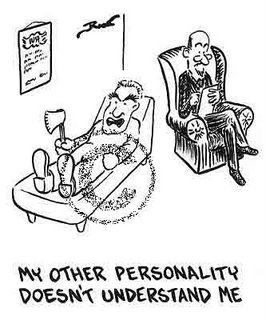 Now I have a secret, and it is like an illness. My habit of concealment is so highly developed I am able to accommodate it. But is is painful--hiding it, living with it. The secrecy re-creates the multiple lives that I am used to. But it is not simple, and it is not the game I had invented as a teenager. I am fifty-two. I know that a double life, a life of multiple personalities, is not an alternating existence of first one then another, like an actor changing clothes. It is both lives, multiple lives, felt and led simultaneously.





 In the summer of 1983, at the age of 29, I moved to Washington, DC and entered the Master of Laws Program at American University Law School. This wasn't exactly the culmination of a lifelong dream. I'd come to Washington to become managing partner of a major law firm, and, in fact, I'd been signed two years earlier as a law clerk by Sagot & Jennings, one of the more reputable law firms in Philadelphia. I thought the line from law clerk to managing partner would be straight and short. But other than occasional rejection letters, I wasn't making much progress, and I was beginning to wonder why I'd ever left Philadelphia, Pennsylvania.

 This post is dedicated to Brad M. Dolinsky, M.D.


 DRAMATIS PERSONAE:


 I have become lost to the world with which I wasted so much time; it has heard nothing from me for so long that it may well think that I am dead!


